The Hidden Cost of Poor AI Governance: Operational, Legal, and Reputational Risks
Poor AI governance risks are becoming more common as artificial intelligence adoption accelerates across enterprises faster than governance frameworks can keep up. Organizations are moving quickly to deploy predictive models, automation tools, and generative AI systems to stay competitive.
In many cases, the focus is on accuracy, speed to deployment, and innovation. Governance, oversight, and accountability structures tend to take a back seat.
This is where the real problem begins.
Gaps in governance don’t usually show up immediately. Unlike system outages or software bugs, they build quietly in the background. Missing documentation, unclear ownership, and inconsistent controls start spreading across teams without much visibility.
Over time, these gaps turn into serious business risks, typically falling into three major categories:
- Operational breakdown
- Legal and regulatory exposure
- Reputational and strategic damage
According to a Deloitte report on AI adoption, 55% of organizations deploying AI still lack mature governance processes, which increases both operational and regulatory exposure as AI scales.
Before diving deeper, it’s important to understand what poor AI governance actually looks like in practice.
This blog breaks down the operational, legal, and reputational risks of poor AI governance, along with how these issues surface as organizations scale.
What Is Considered “Poor” AI Governance?
Weak governance does not necessarily result from negligence. In most organizations, it emerges from structural gaps, unclear accountability, and fragmented processes.
These governance gaps often appear in several critical areas of the AI lifecycle.
Lack of Defined Ownership and Accountability
One of the most common AI governance challenges in enterprises is unclear ownership.
AI initiatives frequently involve multiple departments:
- Data science teams developing models
- Risk management teams reviewing outcomes
- Compliance teams ensuring regulatory alignment
- Business units deploying the models
Without clearly defined responsibilities, governance becomes fragmented.
Common problems include:
- No centralized owner for AI lifecycle governance
- Ambiguity between data science and compliance teams
- Governance treated as advisory rather than enforceable policy
This lack of accountability weakens enterprise AI oversight and creates operational AI risk. Without a structured AI accountability framework, organizations struggle to define responsibility across the AI lifecycle, increasing governance gaps and operational AI risk.
Missing Validation & Documentation Standards
Another sign of poor AI governance risks is inconsistent documentation and validation processes.
Organizations often struggle with:
- Different validation templates across departments
- No centralized repository for model artifacts
- Manual documentation tracking
- Lack of version control for model updates
Without structured documentation, it becomes difficult to demonstrate model validation controls during regulatory audits.
This issue frequently leads to AI governance failures during internal reviews or compliance checks.
Weak Monitoring After Deployment
Many organizations treat governance as a pre-deployment process.
Once a model is launched, monitoring often becomes inconsistent or nonexistent.
Common weaknesses include:
- No defined model performance review cadence
- Lack of model drift thresholds
- No retraining triggers
- Limited post-deployment risk tracking
Without structured monitoring, models may continue operating outside approved risk tolerance levels, increasing AI compliance risk.
Inconsistent Risk Controls Across Departments
Large enterprises often run multiple AI initiatives simultaneously.
However, governance policies are not always enforced consistently.
This creates:
- Different validation standards between teams
- Shadow AI projects bypassing governance
- Inconsistent AI risk management framework adoption
The result is fragmented enterprise AI oversight and rising operational AI risk.
Absence of Governance Maturity Measurement
Organizations frequently lack tools to measure governance maturity.
Without structured assessments, leadership cannot evaluate:
- Oversight effectiveness
- Documentation quality
- Model validation consistency
A governance maturity model is essential for identifying gaps and improving AI lifecycle governance.
Understanding these structural gaps is essential because poor AI governance risks typically emerge from fragmented oversight rather than intentional mismanagement.
Operational Costs of Weak AI Governance
The earliest impact of poor AI governance risks often appears in operational workflows. These costs accumulate long before regulators become involved.
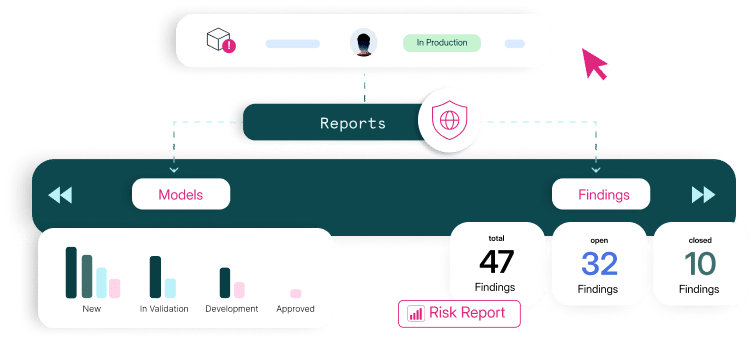
As governance gaps grow, organizations lose visibility into model performance, validation status, and risk exposure across the AI lifecycle.
1. Model Rework and Revalidation Delays
When governance standards are inconsistent, models frequently fail internal review cycles.
Typical issues include:
- Missing validation artifacts
- Incomplete documentation
- Unverified assumptions in model development
This forces teams to repeat validation work, creating delays in deployment timelines.
Failed internal reviews and missing validation artifacts often force teams to revisit development work late in the lifecycle. These rework cycles increase deployment timelines and operational costs, illustrating how poor AI governance risks can disrupt development pipelines. According to McKinsey research, only 1% of organizations believe they have achieved AI maturity highlighting how many enterprises are still developing the governance capabilities required to scale AI effectively.
2. Deployment Bottlenecks
Weak governance also slows deployment pipelines.
Risk and compliance teams often face:
- Poorly documented models
- Missing audit trails
- Incomplete testing evidence
As a result, governance reviews become unpredictable.
Rather than enabling innovation, governance becomes a bottleneck, increasing friction between engineering and compliance teams.
3. Model Drift & Performance Degradation
One of the most dangerous outcomes of AI governance failures is undetected model drift.
Without continuous monitoring, poor AI governance risks increase as models silently deviate from their approved performance thresholds.
Without monitoring thresholds, models may degrade gradually.
Common consequences include:
- Reduced prediction accuracy
- Increased false positives or negatives
- Decisions outside approved risk tolerance
In regulated sectors like finance and insurance, this creates serious AI regulatory exposure.
Without continuous monitoring, these deviations often go unnoticed until they begin impacting real-world decisions.
4. Increased Cross-Functional Friction
Governance gaps often create tension between departments.
Engineering teams may view governance as slowing innovation, while compliance teams struggle to enforce oversight without proper documentation.
This leads to:
- Conflicts between risk and engineering teams
- Lack of shared governance vocabulary
- Reduced trust across departments
Over time, these conflicts slow enterprise AI adoption.
5. Inefficient Model Inventory Management
Many enterprises lack a centralized inventory of deployed AI systems.
Without a structured model registry, organizations may experience:
- Duplicate models performing similar tasks
- Legacy models remaining active without oversight
- Difficulty tracking model versions
These inventory gaps significantly increase AI compliance risk during audits.
Operational disruption is only the beginning. In regulated industries, poor governance escalates into regulatory exposure.
Legal and Regulatory Exposure
Operational disruption is only the beginning.
For organizations in regulated industries, poor AI governance risks can quickly escalate into regulatory penalties.
1. Audit Failures
Regulatory audits require organizations to demonstrate:
- Model validation procedures
- Testing methodology
- Version control history
- Documentation of model assumptions
Without these artifacts, organizations may fail compliance audits.
This is a common issue in industries governed by model risk management regulations.
2. Regulatory Fines & Enforcement
AI governance regulation is expanding rapidly.
Examples include:
- EU AI Act
- U.S. financial model risk guidance (SR 11-7)
- Industry-specific oversight in healthcare and insurance
Organizations lacking structured AI risk management frameworks face increased regulatory scrutiny.
3. Litigation Risk
Weak governance may also expose organizations to lawsuits.
Legal risks can arise from:
- Biased AI decisions
- Discriminatory outcomes
- Automated decisions causing financial harm
These cases are becoming more common as AI adoption increases, especially in high-stakes environments where model decisions directly impact financial outcomes. Real-world examples in insurance AI risk scenarios show how accuracy alone is not enough without strong governance controls.
For example, a 2022 MIT study found several commercial AI systems exhibited measurable bias in decision outcomes, highlighting the importance of strong governance controls.
4. Increased Supervisory Scrutiny
Repeated governance failures often trigger ongoing regulatory oversight.
Organizations may face:
- More frequent audits
- Increased reporting requirements
- Additional compliance reviews
These requirements increase operational costs significantly. Beyond fines and lawsuits, governance failures can erode long-term trust.
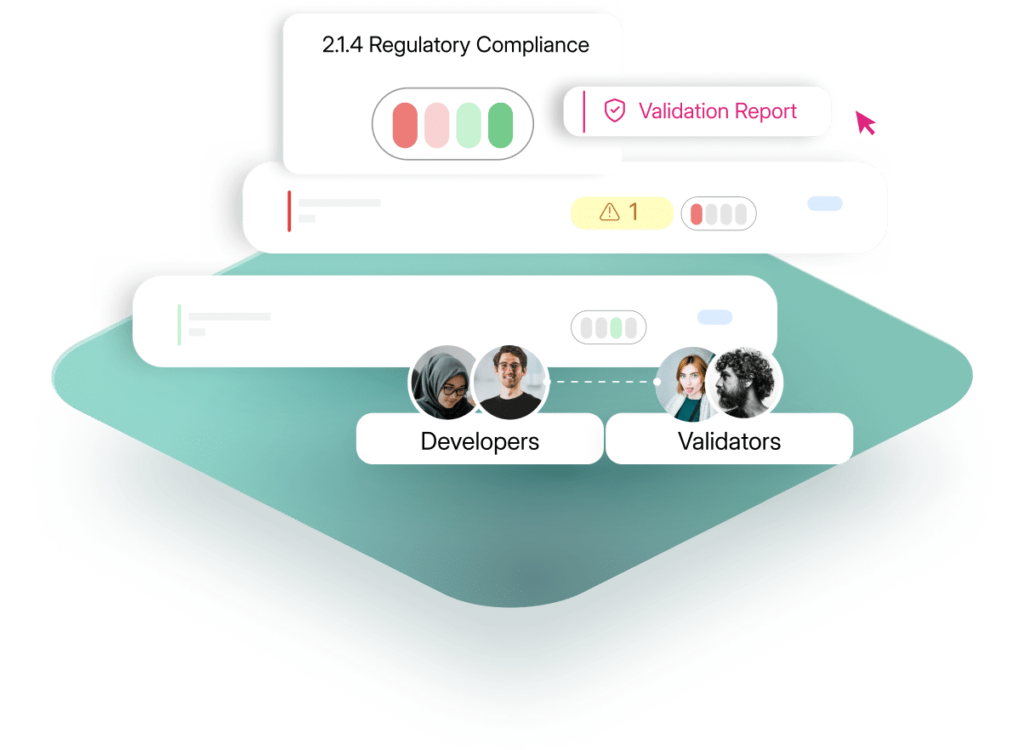
Strong governance requires alignment between developers, validators, and compliance teams to ensure models meet regulatory expectations.
Reputational Damage and Long-Term Brand Impact
Governance failures rarely stay hidden for long. When AI incidents become public, poor AI governance risks quickly transform into visible brand and trust crises.
When AI systems malfunction or produce harmful outcomes, the reputational impact can be severe.
1. Loss of Customer Trust
Consumers expect organizations to use AI responsibly.
Public exposure of biased or faulty AI systems can lead to:
- Loss of customer confidence
- Increased complaints
- Reduced adoption of AI-powered services
Trust is difficult to rebuild once lost.
2. Investor and Board-Level Scrutiny
AI governance failures also attract attention from investors and corporate boards.
Questions often arise regarding:
- Risk oversight
- governance maturity
- regulatory compliance readiness
This scrutiny can affect company valuation and strategic decision-making.
3. Media Amplification of AI Failures
AI controversies spread quickly in media coverage.
A single governance failure can generate widespread negative publicity.
Organizations may be portrayed as irresponsible or careless with AI deployment.
4. Talent and Recruitment Impact
Ethical concerns surrounding AI systems can influence hiring and retention.
Top AI professionals increasingly seek organizations that prioritize responsible AI development.
Companies associated with AI governance failures may struggle to attract skilled talent.
5. Long-Term Strategic Limitations
Once trust is damaged, organizations may become hesitant to deploy AI in high-impact areas.
This creates long-term strategic limitations and slows innovation.
Why Organizations Underestimate Governance Risk
Despite these consequences, many companies underestimate the importance of governance. This mindset often allows poor AI governance risks to grow unnoticed until an operational failure or audit exposes them.
Several factors contribute to this oversight.
Overconfidence in Model Accuracy
Organizations often assume that accurate models equal safe models.
However, accuracy alone does not address:
- documentation quality
- oversight structures
- regulatory compliance
Governance Seen as “Compliance Only”
Many organizations treat governance as a regulatory requirement rather than a strategic risk discipline.
This short-term view prevents investment in scalable governance frameworks.
Lack of Governance Maturity Model
Without maturity assessments, organizations struggle to evaluate the strength of their governance systems.
Siloed AI Initiatives
Shadow AI projects and decentralized experimentation can bypass governance processes.
Reactive Instead of Proactive Governance
In many enterprises, governance is triggered only during audits rather than embedded throughout the AI lifecycle.
Signs Your AI Governance Is at Risk
Organizations can identify governance gaps by evaluating several indicators.
Common warning signs include:
- No centralized model registry
- No lifecycle-based oversight checkpoints
- Documentation created only during audits
- Monitoring dashboards not linked to risk thresholds
- No executive visibility into AI risk posture
- No standardized validation playbooks
- Governance responsibilities not tied to roles
Summary Insight
“If three or more of these indicators apply, governance maturity is likely at risk.”
How to Reduce the Hidden Cost of Poor AI Governance
Reducing poor AI governance risks requires a structured and proactive governance strategy.
1. Establish Clear Enterprise Oversight
Organizations should create governance charters defining:
- roles and responsibilities
- oversight structures
- cross-functional governance committees
Establishing a formal AI accountability framework helps organizations assign clear ownership, enforce governance policies, and strengthen enterprise AI oversight across business units.
2. Standardize Validation & Documentation
Standardization improves governance efficiency. Organizations that implement structured documentation workflows gain better audit readiness and lifecycle visibility, especially when using tools designed for centralized model documentation control.
Key steps include:
- validation templates
- approval workflows
- centralized artifact storage
Structured documentation ensures consistency across teams and makes audit readiness a continuous process rather than a last-minute effort.

3. Implement Continuous Lifecycle Monitoring
Governance must extend beyond deployment.
Effective monitoring includes:
- model drift detection
- performance thresholds
- escalation procedures
4. Align Governance With Business Objectives
Governance should support strategic goals rather than hinder innovation.
Organizations can align governance through:
- defined risk tolerance levels
- governance KPIs
- executive reporting dashboards
5. Conduct Periodic Governance Maturity Assessments
Regular governance reviews help identify emerging risks.
This process may include:
- internal audits
- gap analysis
- improvement roadmaps
How ValidMind Supports Enterprise AI Governance
As AI adoption expands, organizations require structured governance systems to maintain oversight.
The ValidMind AI governance platform helps enterprises strengthen governance through:
Centralized Model Oversight
- Unified AI model inventory
- Lifecycle visibility
- Structured governance workflows
Audit-Ready Documentation
- Centralized validation repositories
- Artifact management
- Version control tracking
Continuous Monitoring & Lifecycle Governance
- Ongoing model performance tracking
- Governance review checkpoints
- Structured oversight processes
Enterprise-Grade Governance Controls
- Role-based access controls
- Cross-team collaboration tools
- Policy alignment capabilities
Conclusion
AI governance is not simply a compliance requirement.
It is a strategic risk management discipline that determines whether AI initiatives succeed or fail at scale.
The cost of weak governance accumulates gradually through operational disruption, regulatory exposure, and reputational damage.
Ultimately, organizations that fail to address poor AI governance risks early face significantly higher operational and regulatory costs later.
Organizations that invest early in governance maturity build stronger foundations for responsible AI innovation.
See how your organization can reduce poor AI governance risks with a structured approach. Request a demo to explore how it works in practice.
Poor AI Governance Risks FAQs
1. What are the risks of poor AI governance?
Poor AI governance risks include operational inefficiencies, regulatory exposure, audit failures, model drift, and reputational damage. Without structured oversight, organizations struggle to manage AI lifecycle risks effectively and demonstrate compliance during regulatory reviews.
2. How does poor AI governance impact regulatory compliance?
Weak governance leads to missing documentation, inconsistent validation procedures, and incomplete audit trails. These gaps make it difficult to prove compliance during regulatory audits and may increase the likelihood of enforcement actions or fines.
3. Can weak AI governance cause financial loss?
Yes. Governance failures can lead to deployment delays, model rework, litigation costs, and regulatory penalties. Over time, these operational disruptions significantly increase costs and reduce the profitability of AI initiatives.
4. What are signs of weak AI governance in an organization?
Common indicators include unclear ownership, missing model documentation, lack of monitoring processes, inconsistent validation standards, and poor audit preparedness.
5. How does AI governance affect enterprise reputation?
AI failures caused by poor governance can reduce customer trust and attract negative media attention. Public perception of irresponsible AI use can damage brand credibility and long-term stakeholder confidence.
6. Why is AI model monitoring critical for governance?
Continuous monitoring allows organizations to detect model drift, performance degradation, and emerging risks after deployment. This ensures models operate within approved risk tolerance levels and reduces exposure to hidden failures.
7. What is the difference between AI governance and AI risk management?
AI governance defines oversight structures, policies, and accountability frameworks. AI risk management focuses on identifying, measuring, and mitigating specific risks within those governance structures.
8. How can enterprises improve AI governance maturity?
Organizations can improve governance maturity by implementing standardized validation processes, defining ownership roles, establishing lifecycle monitoring, and conducting periodic governance assessments.
9. Are AI governance failures common in large enterprises?
Yes. Rapid AI adoption often outpaces governance controls, leading to documentation gaps, monitoring weaknesses, and compliance risks across enterprise AI portfolios.
10. How does AI governance reduce legal risk?
Structured governance ensures transparent documentation, consistent validation procedures, and clear accountability. These controls help organizations demonstrate compliance during audits and reduce exposure to regulatory penalties and litigation.