How AI Governance Consulting Supports Enterprise AI Risk Management
AI governance consulting is becoming increasingly important as your organization scales AI across critical business functions. From automated decision-making to customer-facing applications, AI is no longer experimental. It directly impacts risk, compliance, and operational outcomes.
However, as adoption grows, many teams struggle to manage the complexity that comes with it. Without a clear AI governance strategy, your organization may face gaps in enterprise AI risk management, inconsistent controls, and limited visibility across models.
This is where AI governance consulting plays a key role. It helps your team design structured approaches, align governance with business goals, and implement effective AI governance models that work in real-world environments.
According to IBM’s Global AI Adoption Index 2024, only 24% of organizations have operationalized AI governance across their models, highlighting a significant gap between AI adoption and effective oversight.
In this guide, you’ll learn how AI governance consulting supports enterprise AI risk management, the challenges it helps solve, and how your organization can build a scalable, practical approach to governance with the right strategy and tools.
Why Enterprises Turn to AI Governance Consulting
As your organization expands AI across critical functions, gaps in governance become harder to ignore. This is where AI governance consulting helps bring structure, clarity, and control to how your teams manage AI at scale.
AI Adoption Is Outpacing Governance Maturity
AI adoption is accelerating across enterprise use cases such as underwriting, fraud detection, and customer decisioning. Your teams may already be deploying models faster than governance processes can keep up.
In many cases, governance frameworks lag behind deployment. Risk and compliance teams are often reacting to issues after they occur instead of proactively managing them.
This imbalance creates pressure on enterprise AI risk management, making it difficult to maintain consistent AI compliance and governance across systems.
Internal Teams Lack Structured Governance Expertise
Your internal teams may be highly skilled, but governance often falls into a gap between functions.
- Data science teams focus on model performance and accuracy
- Compliance teams may lack deep technical visibility into AI systems
- No single team owns end-to-end AI enterprise governance
This lack of alignment leads to fragmented AI governance models and inconsistent oversight. AI governance consulting helps bridge this gap by bringing structured expertise and a unified AI governance strategy.
Increasing Regulatory and Audit Pressure
Regulatory expectations around AI are increasing rapidly. Your organization is now expected to demonstrate:
- Model explainability
- Comprehensive documentation
- Clear audit trails
However, many enterprises are not fully prepared for model audits or compliance reviews. Without structured processes, meeting these expectations becomes challenging.
This is where AI governance consulting strengthens your readiness by aligning governance with AI compliance and governance requirements and improving model validation and oversight.
Need for Cross-Functional Alignment
AI governance is not owned by a single team. It spans across:
- Data science
- Risk and validation teams
- Compliance
- Business stakeholders
Without alignment, your governance efforts become fragmented.
AI governance consulting helps bring these stakeholders together under a single framework, ensuring your organization operates with consistent enterprise AI risk controls and a unified governance approach.
What AI Governance Consulting Actually Delivers
When implemented effectively, AI governance consulting provides your organization with more than just guidance. It delivers structured systems and processes that can be applied across your AI ecosystem.
Governance Framework Design
A strong foundation starts with defining how governance operates within your organization.
AI governance consulting helps you:
- Establish governance structures and decision-making hierarchies
- Define role-based ownership models across teams
- Set up governance committees and approval workflows
This creates clarity and ensures your AI governance strategy is actionable, not just theoretical.
Risk Identification and Classification
Understanding risk is central to effective enterprise AI risk management.
Consulting helps your team:
- Categorize models based on risk levels (high vs low)
- Assess business impact and potential consequences
- Map regulatory exposure across use cases
This structured approach strengthens your model risk management framework and supports better decision-making.
Policy and Control Definition
Without clear policies, governance cannot scale.
AI governance consulting helps define:
- Documentation standards for all AI models
- Validation requirements aligned with risk levels
- Approval checkpoints before deployment
- Governance policies that guide teams consistently
These controls ensure your organization maintains strong AI lifecycle governance and consistent enforcement across systems.
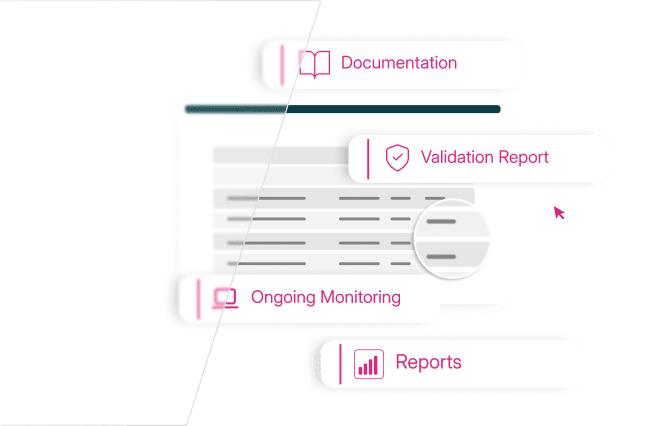
Effective governance covers every stage, from initial documentation through validation reporting, ongoing monitoring, and audit-ready reports, all managed within a single structured system.

Compliance Alignment
Meeting regulatory expectations requires more than documentation.
Consulting helps your organization align governance practices with:
- External regulatory frameworks
- Internal policies and risk standards
This improves audit readiness and ensures your teams are prepared for compliance reviews while maintaining strong AI compliance and governance.
Governance Roadmap and Maturity Model
Finally, AI governance consulting provides a clear path forward.
Your organization can:
- Assess the current state of governance maturity
- Define a target operating model
- Build a phased implementation roadmap
This structured progression allows your teams to scale governance alongside AI adoption, ensuring long-term sustainability in enterprise AI risk management.
Where AI Governance Consulting Falls Short
While AI governance consulting provides a strong starting point, many organizations begin to see limitations once frameworks move from strategy to execution. If your organization has already worked with consultants, you may recognize some of these gaps.
Governance Becomes Static Documentation
In many cases, AI governance consulting results in well-structured frameworks that live in documents rather than workflows.
These often include:
- Policy documents stored in shared drives
- Slide decks outlining governance models
- Static guidelines that teams are expected to follow
The challenge is that these frameworks lack enforcement. Your teams may understand what needs to be done, but without embedded systems, governance becomes optional rather than operational. Over time, this weakens AI compliance and governance and creates inconsistencies across teams.
No Continuous Monitoring After Deployment
A major limitation of traditional AI governance consulting is its focus on pre-deployment stages.
Once models go live, your organization may not have systems to track:
- Model drift
- Performance degradation
- Compliance violations
Without AI governance monitoring, governance effectively stops at deployment. This creates blind spots in enterprise AI risk management, where risks emerge but go undetected until they cause impact.
Fragmented Execution Across Teams
Even with a defined framework, execution often varies across teams.
In your organization:
- Data science teams may interpret policies differently
- Risk teams may apply stricter controls
- Business teams may bypass governance for speed
This lack of standardization leads to fragmented AI governance models and weakens overall enterprise AI risk controls. Without a centralized approach, governance becomes inconsistent and difficult to enforce.
Manual and Inefficient Processes
Many organizations rely on manual processes to implement governance after consulting engagements.
Common examples include:
- Excel sheets to track models
- Email chains for approvals
- Manual documentation updates
These approaches do not scale. As your AI portfolio grows, manual workflows slow down operations and increase the risk of errors. This makes it harder to maintain effective AI lifecycle governance.
Governance Decays Over Time
Without continuous enforcement, governance tends to weaken.
Over time, your organization may notice:
- Policies not being followed consistently
- Documentation becoming outdated
- Lack of accountability across teams
This decay reduces the effectiveness of AI governance consulting efforts and increases risk exposure. Sustaining governance requires systems that keep processes active and enforceable.
The Shift from Advisory to Operational Governance
To address these gaps, organizations are moving beyond static frameworks toward operational models of AI governance consulting that focus on execution.
Why Governance Must Be Continuous
AI systems are dynamic. Once deployed, they continue to evolve based on new data and changing conditions.
For your organization, this means:
- Data shifts can impact model behavior
- Model outputs may change over time
- Risks can emerge post-deployment
Without continuous oversight, governance quickly becomes outdated. This is why modern enterprise AI risk management depends on ongoing monitoring and adaptation.
Moving from Frameworks to Execution
Governance is no longer just about defining policies or frameworks.
To be effective, your organization needs governance that includes:
- Monitoring of live models
- Enforcement of policies in real workflows
- Tracking of changes and decisions
Operational governance requires a closed loop where developers, AI models, automated evaluation, and human validators each play a defined role, creating accountability at every step.
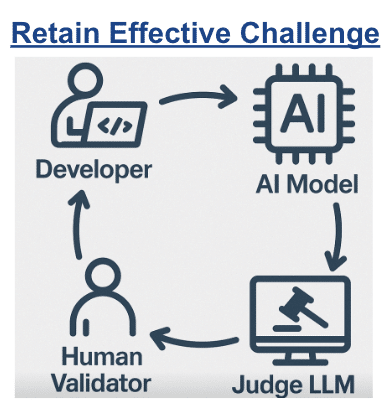
This shift ensures that AI governance consulting moves from theory to practice, enabling stronger model validation and oversight.
Need for System-Driven Governance
As AI adoption scales, governance must be supported by systems rather than manual effort.
Your organization needs governance that is:
- Automated to reduce manual workload
- Scalable across multiple models and teams
- Standardized to ensure consistency
System-driven governance strengthens AI compliance and governance and enables your teams to manage complexity more effectively.
How AI Governance Monitoring Strengthens Risk Management
One of the most important enablers of operational governance is AI governance monitoring. It helps your organization maintain continuous visibility and control across the AI lifecycle.
Continuous Model Performance Monitoring
With AI governance monitoring, your teams can track how models perform in real-world conditions.
This includes:
- Monitoring outputs for accuracy
- Identifying unusual patterns or anomalies
- Ensuring models remain reliable over time
This continuous visibility strengthens enterprise AI risk management and helps prevent issues before they escalate.
Drift Detection and Risk Alerts
AI models are sensitive to changes in data.
Monitoring systems can detect:
- Data drift
- Concept drift
When these changes occur, alerts can trigger governance actions, allowing your teams to respond quickly. This proactive approach improves enterprise AI risk controls and reduces unexpected failures.
Audit-Ready Documentation Tracking
Maintaining documentation is critical for compliance.
With AI governance monitoring, your organization can ensure:
- Validation artifacts are consistently updated
- Version control is maintained across models
- Audit trails are readily available
This supports strong AI compliance and governance and simplifies audit processes.
Lifecycle-Based Governance Oversight
Effective governance must cover the entire AI lifecycle.
Monitoring enables oversight across:
- Development
- Validation
- Deployment
- Ongoing monitoring
This ensures your AI lifecycle governance remains active at every stage, not just during initial approval.
Bridging the Gap: From Consulting to Scalable Execution
To make AI governance consulting truly effective, your organization needs to bridge the gap between frameworks and real-world execution.
Translating Frameworks into Workflows
The first step is turning policies into actionable processes.
This means converting governance guidelines into:
- Structured workflows
- Standardized templates
- Repeatable processes
By doing this, your organization ensures that governance is applied consistently across all AI systems.
Turning governance policies into structured documentation workflows means every model follows the same process, with progress tracked, datasets summarized, and teams collaborating in one place.
Standardizing Governance Across the Organization
Consistency is key to scaling AI enterprise governance.
Your teams should follow:
- Unified governance processes
- Standard validation and approval workflows
- Centralized governance structures
This reduces variability and strengthens overall enterprise AI risk management.
Enabling Real-Time Governance Visibility
Finally, your organization needs visibility into how governance is functioning in real time.
This includes:
- Dashboards that track model performance and risk
- Centralized model inventories
- Ongoing risk tracking and reporting
With real-time visibility, your teams can make informed decisions and maintain strong control over AI systems, ensuring that AI governance consulting delivers long-term value rather than short-term guidance.
How AI Governance Platforms Complement Consulting
As your organization moves beyond strategy, AI governance consulting alone is not enough to sustain execution. This is where AI governance platforms and AI governance software complement consulting by turning frameworks into operational systems that scale across your enterprise.
Centralized AI Governance Infrastructure
A centralized AI governance platform gives your organization a single source of truth for all AI systems. Instead of relying on scattered tracking, your teams can manage governance through a unified model inventory.
This allows you to:
- Track all models across business units
- Maintain consistent ownership and accountability
- Apply standardized AI governance models across teams
With centralized infrastructure, your AI enterprise governance becomes more structured, improving visibility and strengthening enterprise AI risk management.
A centralized governance platform gives your team a unified view of every model across its lifecycle, with clear ownership, linked evidence, and activity tracked in real time.

Automated Governance Workflows
Manual governance processes often slow down execution and create inconsistencies.
With AI governance software, your organization can automate:
- Approval workflows for model deployment
- Validation tracking across teams
- Enforcement of governance policies
Automation ensures that your AI governance strategy is applied consistently, reducing dependency on manual coordination and improving AI compliance and governance.
Integrated Model Risk Management
Strong governance requires tight alignment with risk management.
By integrating AI model risk management, your organization can:
- Assign risk scores to models based on impact
- Standardize validation processes
- Track models across the entire lifecycle
This integration strengthens your model risk management framework and improves model validation and oversight, ensuring that governance and risk management work together seamlessly.
Seamless Integration Across Systems
For governance to scale, your systems must be connected.
An effective AI governance platform allows your organization to integrate:
- Data systems
- Compliance tools
- Risk management platforms
These integrations reduce silos and enable better collaboration across teams. In practice, strong end-to-end AI governance integrations improve visibility and ensure governance is consistently enforced across your ecosystem.
How ValidMind Turns AI Governance Consulting into Action
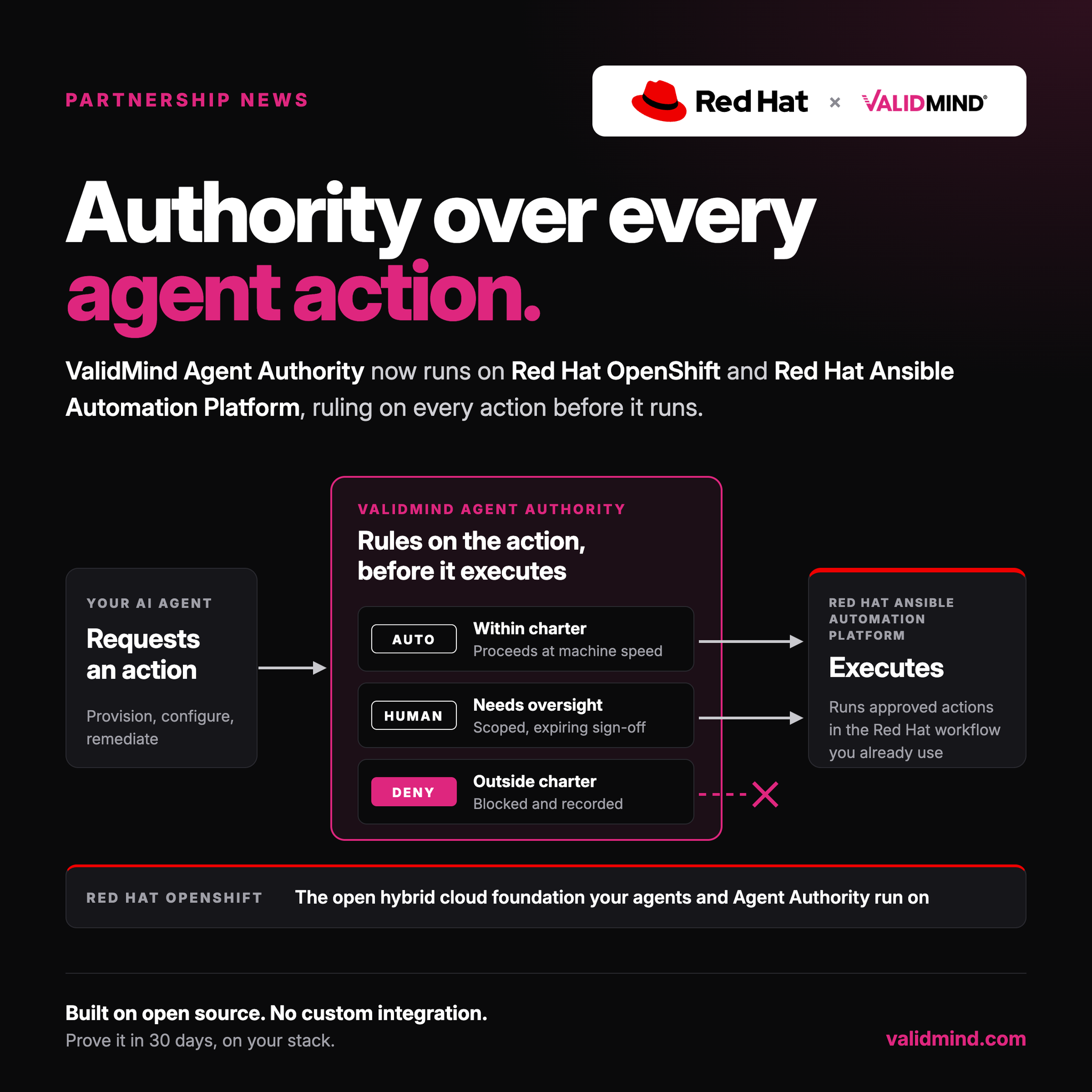
While AI governance consulting defines the strategy, platforms like ValidMind help your organization put that strategy into action. This is where governance becomes operational, measurable, and scalable.
From Strategy to Execution
ValidMind helps translate consulting outputs into real workflows.
Instead of leaving governance in documents, your organization can:
- Convert policies into structured processes
- Implement consistent workflows across teams
- Ensure governance is actively enforced
This shift makes AI governance consulting practical and actionable, supporting long-term enterprise AI risk management.
Centralized Governance and Model Inventory
ValidMind provides a centralized system to manage all your AI models.
Your organization can:
- Track every model in a unified inventory
- Assign ownership across teams
- Monitor models throughout the lifecycle
This improves visibility and strengthens AI lifecycle governance, ensuring consistent oversight.
Continuous Monitoring and Risk Visibility
Governance does not stop at deployment.
With continuous monitoring capabilities, your teams can:
- Track model performance in real time
- Receive alerts for potential risks
- Enforce governance policies dynamically
This strengthens AI governance monitoring and ensures your enterprise AI risk controls remain effective over time.
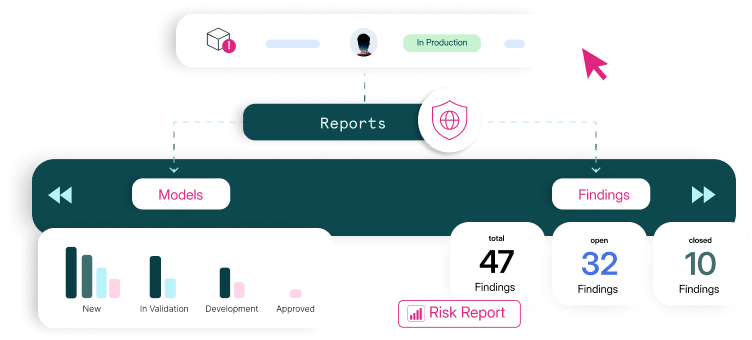
ValidMind’s reporting dashboard gives your risk officers a real-time view across the entire model portfolio, from models in development through production, with open findings and risk reports always current.
Enterprise-Grade Model Risk Management
ValidMind also supports robust risk management processes.
Your organization can:
- Implement structured validation workflows
- Manage documentation across the lifecycle
- Maintain audit-ready records
This improves model validation and oversight and ensures readiness for regulatory reviews.
Proven Enterprise Impact
Organizations across industries are already applying these approaches in real-world scenarios.
For example, in one case, an insurer strengthened governance processes and improved confidence in AI systems through structured implementation, as seen in AI governance case study for an insurer.
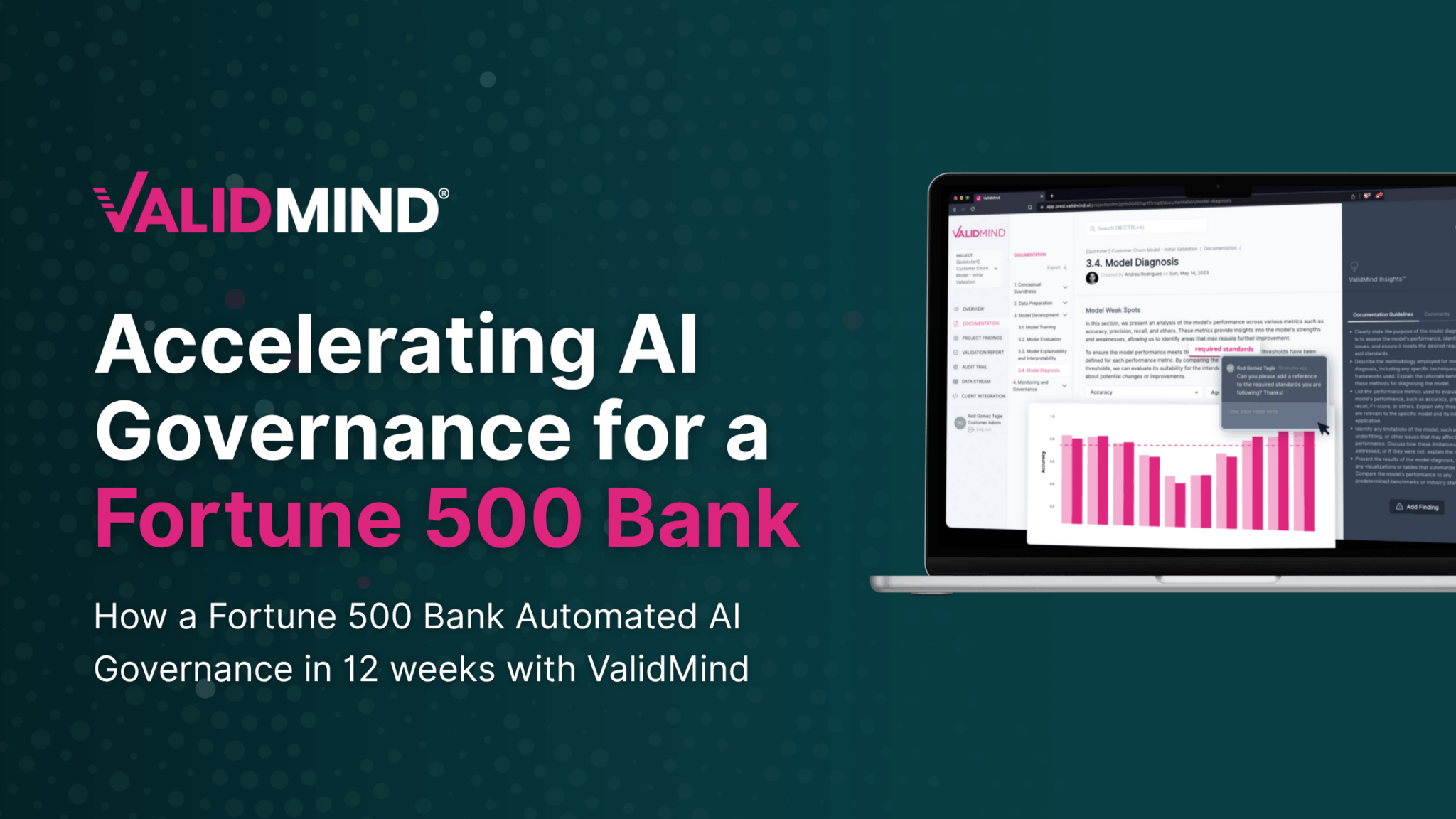
Similarly, a large financial institution accelerated governance adoption across teams by combining strategy with execution, as demonstrated in AI governance case study for a Fortune 500 bank.
These examples show how combining AI governance consulting with platforms enables scalable and effective AI enterprise governance.
When Do You Need Consulting vs a Governance Platform?
Understanding when to rely on AI governance consulting, a platform, or both is key to building a scalable approach.
When Consulting Is Enough
AI governance consulting is often sufficient when your organization is in the early stages of AI adoption.
At this stage, your focus is on:
- Defining governance frameworks
- Establishing policies and standards
- Creating an initial AI governance strategy
Consulting helps lay the foundation for future growth.
When Consulting Is Not Enough
As your organization scales AI, consulting alone may no longer meet your needs.
You may face:
- Multiple models running across business units
- Increasing regulatory and audit requirements
- Challenges in maintaining consistent governance
At this stage, relying only on AI governance consulting can lead to gaps in execution and weaker enterprise AI risk management.
When You Need Both
For most enterprises, the best approach is combining both.
- AI governance consulting helps define the strategy
- AI governance platforms enable execution
This combination ensures that your organization can design effective governance while also implementing it at scale, maintaining strong AI compliance and governance and long-term control over AI systems.
Best Practices for Enterprise AI Governance
Building effective AI enterprise governance in your organization requires more than defining policies. It involves creating systems, accountability, and processes that can scale as your AI adoption grows. The following practices help ensure your governance approach remains practical and sustainable.
Align Governance with Business Risk
Your AI enterprise governance should always reflect the level of risk associated with each use case. Not every model requires the same level of oversight.
For example, a model influencing financial decisions or customer outcomes should have stricter controls compared to internal analytics models. Aligning governance with business impact helps your organization prioritize efforts and strengthen enterprise AI risk management without slowing innovation.
Define Clear Ownership and Accountability
One of the most common gaps in AI enterprise governance is unclear ownership.
Your organization should clearly define who is responsible for:
- Model development
- Validation and approval
- Ongoing monitoring and compliance
Establishing accountability across data science, risk, and compliance teams ensures that governance is consistently applied. This also supports stronger AI compliance and governance and reduces the risk of oversight gaps.
Standardize Validation and Documentation
Consistency is critical for scaling AI enterprise governance.
Your teams should follow standardized processes for:
- Model validation and testing
- Documentation of model design and decisions
- Approval workflows before deployment
Standardization improves model validation and oversight and ensures that your governance approach remains consistent across all business units.
Implement Continuous Monitoring
Governance does not end at deployment.
By implementing continuous AI governance monitoring, your organization can:
- Track model performance in real time
- Detect drift or unexpected behavior
- Maintain ongoing compliance
This strengthens enterprise AI risk controls and ensures your governance remains active throughout the AI lifecycle.
Use Technology to Scale Governance
As your AI portfolio grows, manual processes become difficult to manage.
Using AI governance platforms and AI governance software allows your organization to:
- Automate governance workflows
- Improve visibility across models
- Ensure consistent enforcement of policies
A structured approach to scaling AI governance without slowing down AI helps your teams maintain speed while strengthening governance at scale.
The Future of AI Governance Consulting
The role of AI governance consulting is evolving as organizations move from strategy to execution. What was once focused on advisory services is now shifting toward operational enablement.
One key trend is the transition from static frameworks to execution-driven models. Your organization will increasingly expect AI governance consulting to deliver not just policies, but systems and workflows that can be implemented directly.
Regulatory expectations are also increasing. As compliance requirements become stricter, your governance approach must be more structured, transparent, and audit-ready. This further strengthens the need for integrated AI compliance and governance practices.
Another major shift is the convergence of consulting and technology. Organizations are combining AI governance consulting with AI governance platforms to bridge the gap between strategy and execution.
Finally, the rise of continuous governance systems is reshaping how oversight is managed. Instead of periodic reviews, your organization will rely on ongoing monitoring, automated controls, and real-time visibility to maintain strong AI enterprise governance.
Conclusion: Consulting Starts It, Systems Sustain It
AI governance consulting plays a critical role in helping your organization define governance frameworks, align stakeholders, and establish a clear AI governance strategy. It provides the foundation needed to manage risk and ensure consistent AI compliance and governance.
However, long-term success depends on what happens after the strategy is defined. Your organization needs execution, continuous monitoring, and system-driven governance to sustain those efforts. Without this, even the best frameworks can lose effectiveness over time.
By combining AI governance consulting with the right platforms and processes, your organization can build a scalable approach to enterprise AI risk management, maintain strong oversight, and adapt as AI systems evolve.
If your organization is looking to move from strategy to execution, solutions like ValidMind can help you operationalize governance, improve model validation and oversight, and maintain real-time visibility across your AI systems. Scheduling a demo today can give your team a clear view of how to turn governance into a continuous, scalable capability.
AI Governance Consulting FAQs
1. What is AI governance consulting?
AI governance consulting helps organizations design and implement frameworks to manage AI risk, ensure compliance, and establish oversight across AI systems. It focuses on defining policies, roles, and processes to align AI with regulatory and business requirements.
2. Why do enterprises need AI governance consulting?
Enterprises need AI governance consulting to manage increasing model risk, meet regulatory expectations, and establish structured governance frameworks. It helps organizations align AI initiatives with compliance, accountability, and risk management requirements.
3. How does AI governance consulting support AI risk management?
AI governance consulting supports risk management by defining risk frameworks, establishing validation processes, and setting governance controls. It helps organizations identify, assess, and manage risks associated with AI models throughout their lifecycle.
4. What are the key benefits of AI governance consulting?
Key benefits include improved compliance, better model risk oversight, clear governance structures, and standardized processes. It also helps organizations scale AI responsibly while maintaining transparency and accountability.
5. What are the limitations of AI governance consulting?
AI governance consulting provides strategic guidance but often lacks execution capabilities. Without supporting systems, governance processes may remain manual, inconsistent, and difficult to scale across the organization.
6. How do AI governance platforms complement consulting?
AI governance platforms complement consulting by enabling execution. They automate workflows, centralize model tracking, and provide continuous monitoring, helping organizations enforce governance policies consistently. Platforms like ValidMind support this by translating governance frameworks into structured, operational workflows.
7. What industries benefit most from AI governance consulting?
Industries such as banking, financial services, insurance, and healthcare benefit most due to strict regulatory requirements and higher model risk exposure.
8. How can organizations operationalize AI governance frameworks?
Organizations can operationalize governance by combining consulting with governance platforms, implementing standardized workflows, and enabling continuous monitoring across the AI lifecycle. Solutions like ValidMind help centralize governance processes and maintain audit-ready documentation.
9. What is the difference between AI governance consulting and AI governance software?
AI governance consulting focuses on strategy, framework design, and advisory, while AI governance software enables implementation, monitoring, and ongoing enforcement of governance processes.
10. How does AI governance consulting improve compliance?
AI governance consulting improves compliance by aligning AI systems with regulatory standards, defining documentation requirements, and establishing audit-ready governance processes.