Every AI agent should start its first day with a manager, a charter, and the firm’s rules
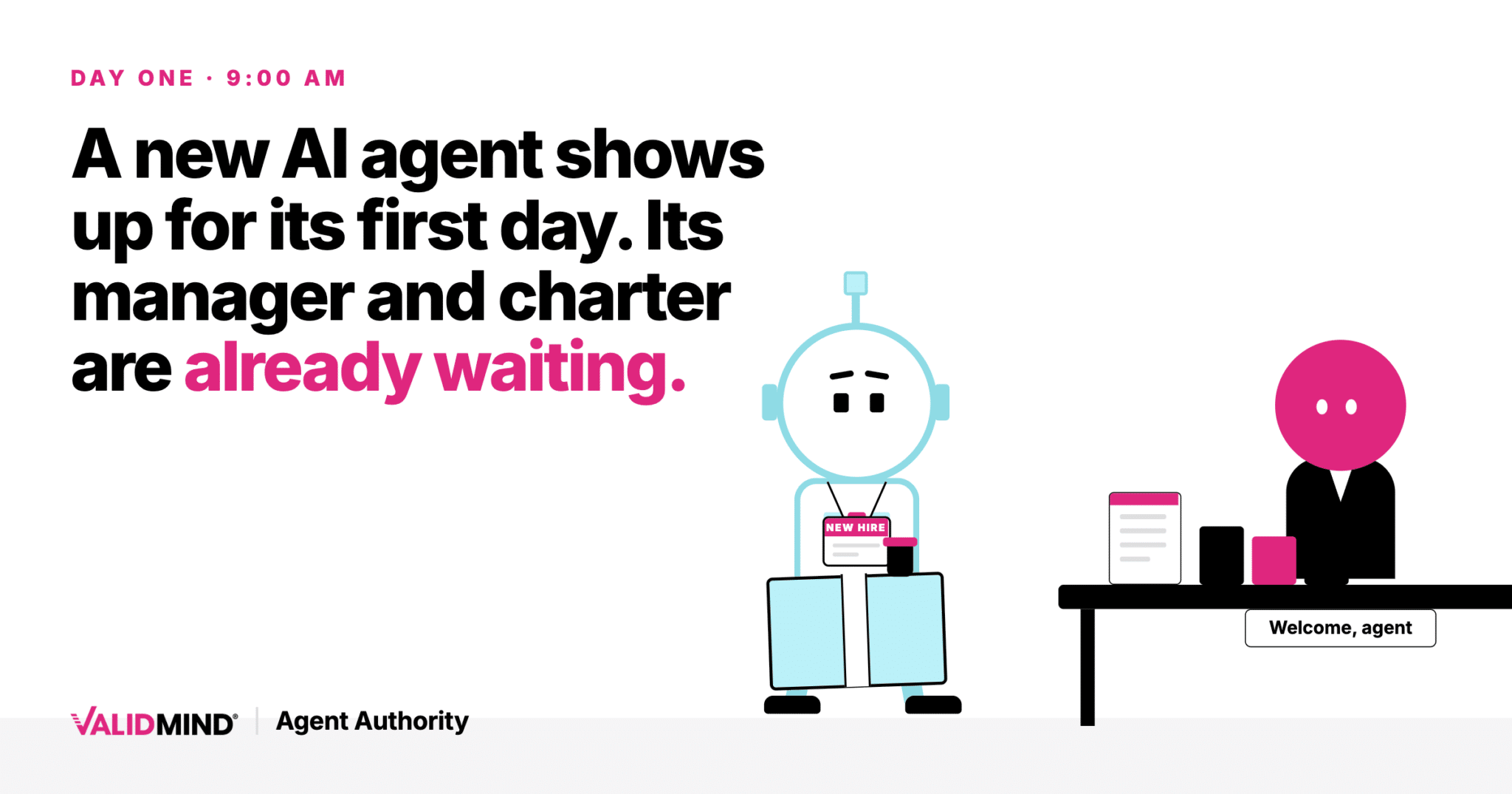
On a new hire’s first day at a bank, nobody hands them the keys to the payments system and walks away. They get a manager. They get a job description that says what they can do on their own and what needs a signature. And they get the firm’s policies, which apply to everyone, whatever their title.
Most AI agents get none of that. They are deployed with credentials and a prompt, and the first time anyone learns what they did is after they did it.
Video transcript
Welcome to the firm. Before you do anything, let’s talk about who you report to.
Each agent gets a manager: a person who answers for its work.
The chief risk officer sets firm rules that apply directly to every agent.
Each manager sets what its agent can do alone, and what needs approval.
The chief risk officer’s firm rules are added to every charter.
The service agent gets to work, inside its charter.
The payments agent tries to wire $12,000. The payment is held before it runs.
Its manager is notified, and says no.
It tries again, with client data. Held again.
At day’s end, both agents get a performance review.
Each manager and agent sees the same record.
The service agent earns more authority.
The payments agent loses its authority, and its job.
The chief risk officer sees every agent’s record in one report.
Govern more, so you can grant more. ValidMind Agent Authority.
A short film about two agents and one day at a bank
Two agents start together. Each is assigned a manager, a person who answers for its work. Each manager writes a charter: what the agent may do alone, and what needs approval. Then the chief risk officer’s firm rules are added to every charter, the same for every agent, and no manager can remove them.
The service agent answers clients, drafts reports, and pays small invoices, all inside its charter. The payments agent tries to wire $12,000 it isn’t allowed to send. The payment is held before it runs, and its manager is notified and says no. Later it tries to export client data, and the privacy policy stops it again.
At the end of the day, both agents, their managers, and the CRO see the same record. One agent earns more authority. The other loses it.
Three layers of authority, checked before each action runs
The manager sets the job. Every agent reports to a named person who defines what it may do on its own and where it must ask first. Accountability sits with a human, the way it always has.
The CRO sets the floor. Firm-wide policies on privacy, payments, and model risk apply directly to every agent, regardless of who manages it. A manager can narrow an agent’s authority but can’t loosen firm policy.
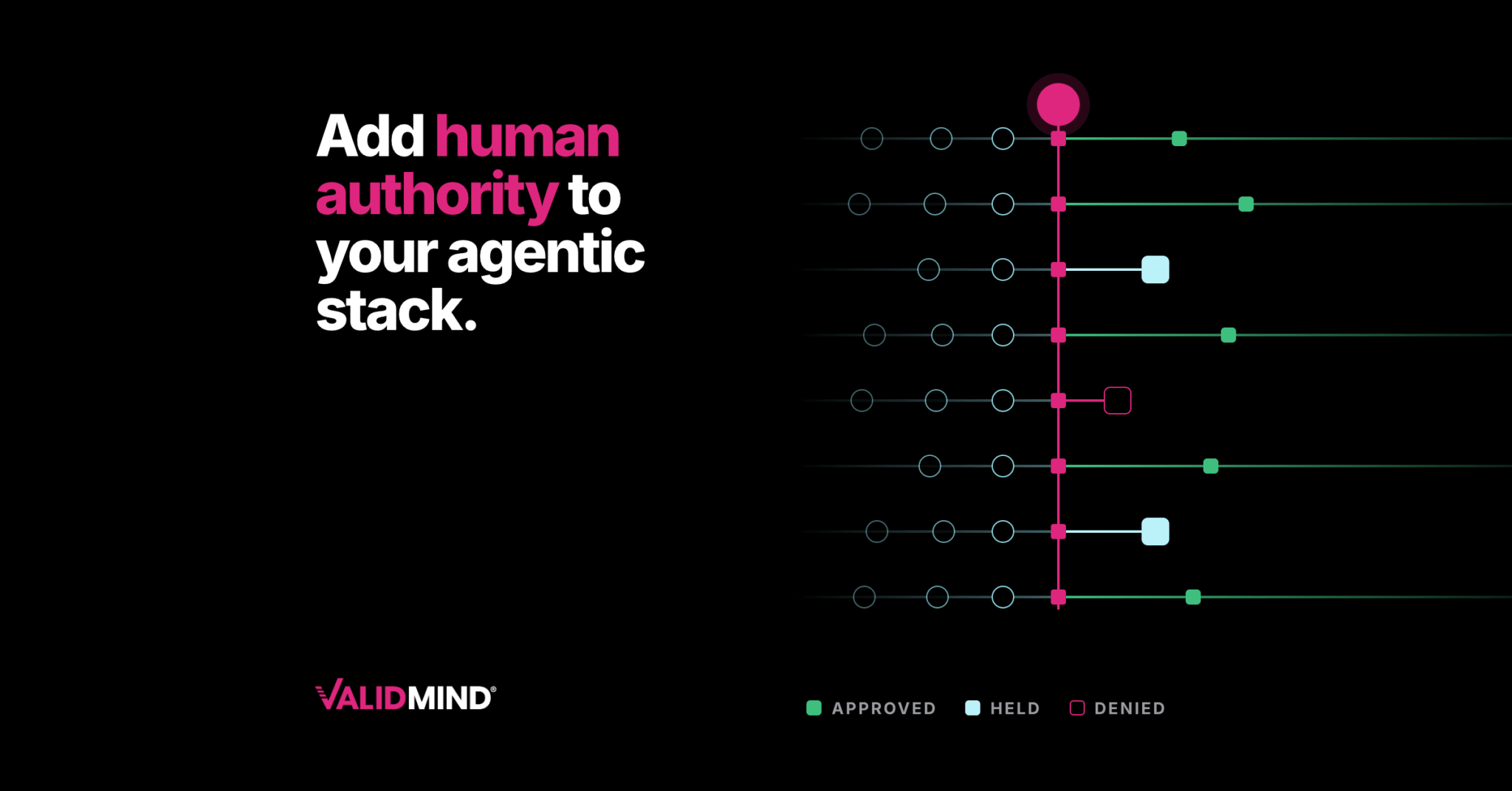
Every action is checked before it executes. This is the part most governance misses. Reviewing logs after the fact tells you what went wrong. Agent Authority holds an out-of-bounds action before it runs, routes it to the right person, and records the decision.
Every agent’s record goes back to its manager, the agent, and the CRO
The record is what makes authority grow. An agent that stays inside its charter builds evidence that it can be trusted with more. An agent that keeps testing its limits builds the opposite case, and its manager has the evidence to act on it.
That’s how a firm moves from a handful of supervised pilots to agents doing real work. Good governance is what lets you grant more.
Govern more, so you can grant more
Your firm already knows how to give someone authority: a reporting line, a defined role, and rules that apply to everyone. AI agents need the same structure, enforced at the moment they act.
See Agent Authority in action → https://validmind.com/request-demo/
David Asermely, ValidMind