Agent Authority and the Future of Infrastructure Automation
Red Hat Coffee Talks · Vulnerability management
AI governance is usually treated as a brake. In vulnerability management, clear rules for AI agents are what let you automate remediation without giving up control.
David Asermely, ValidMind · with Andrea Ferraresi, Red Hat, and Spencer Krum, ValidMind
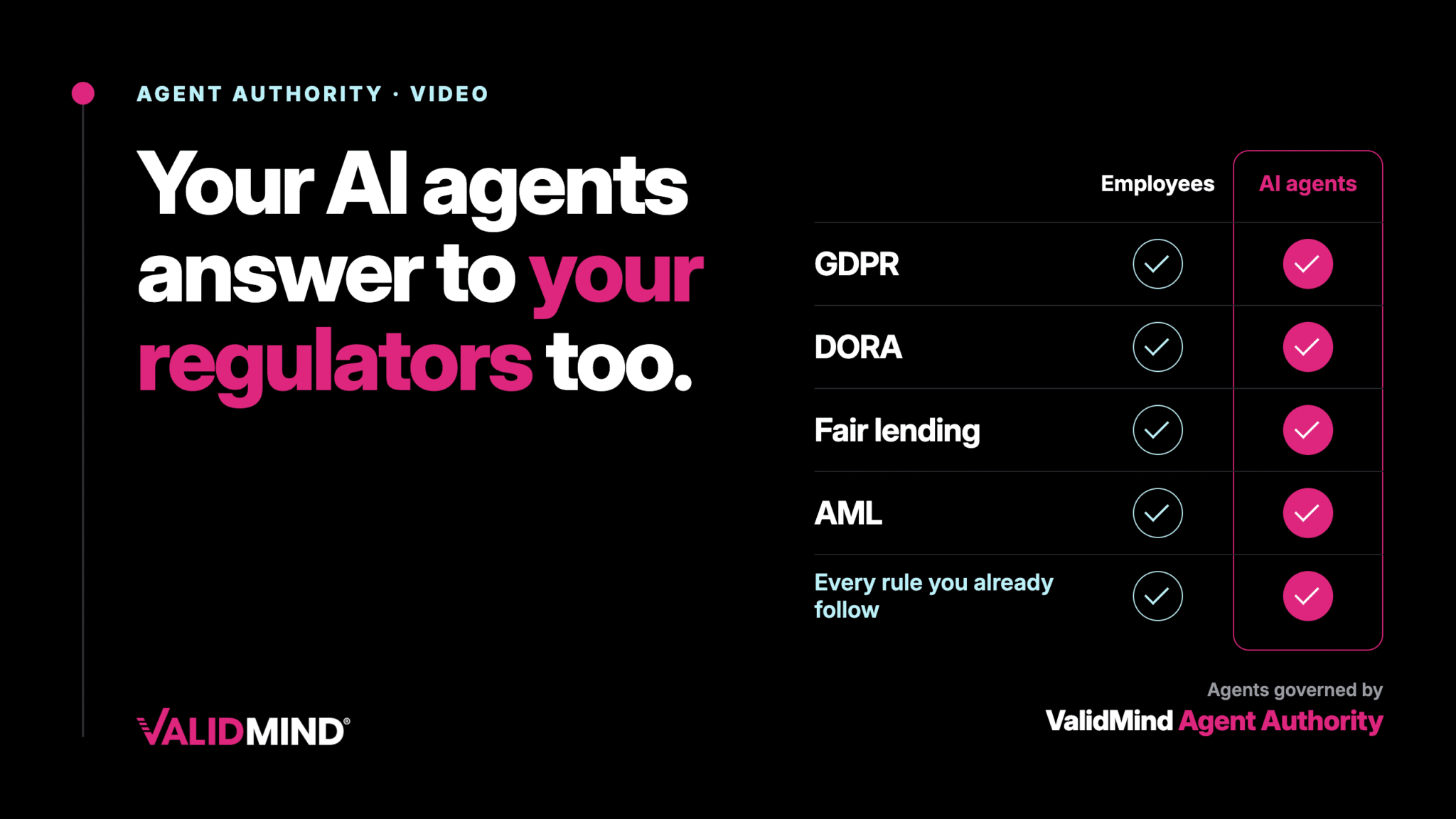
Red Hat has led on vulnerability management for years. But CVEs now arrive faster than any team can remediate by hand, so security teams will need AI agents to keep up. No security team will let an agent patch production unless it follows the same change rules their people do.
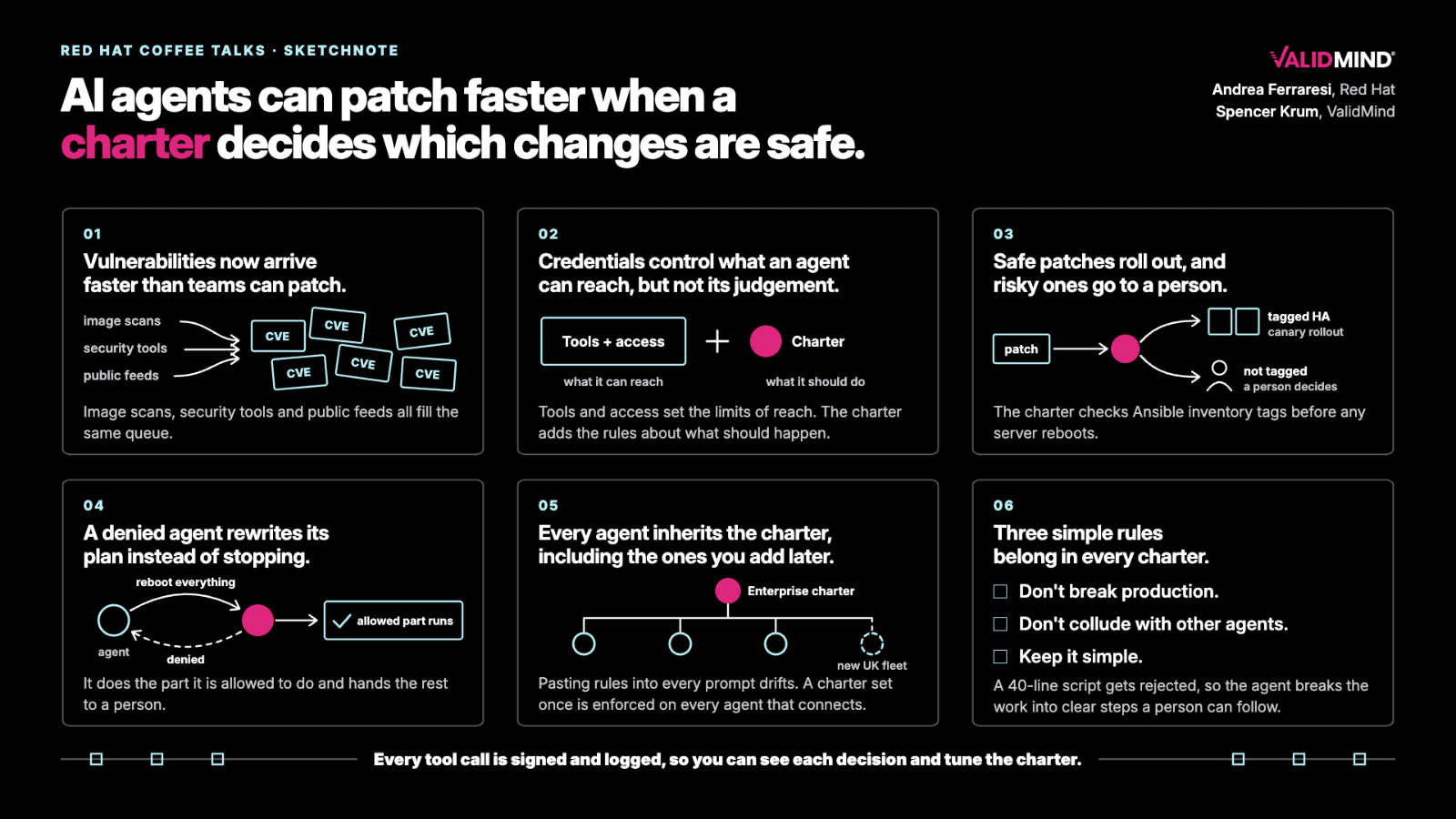
In a recent Red Hat Coffee Talk, Andrea Ferraresi and Spencer Krum walked through how that works in practice. The sketch above captures six ideas from the conversation.
01Vulnerabilities now arrive faster than teams can patch them.
Image scans, security tools and public feeds all fill the same queue. Adding people does not close the gap. Agents can, if you can trust what they do.
02Credentials decide what an agent can reach, and a charter decides what it should do.
Tools and access set the limits of reach. They say nothing about judgement. A charter adds that: your team’s change rules, written in plain language, checked against every action before it runs.
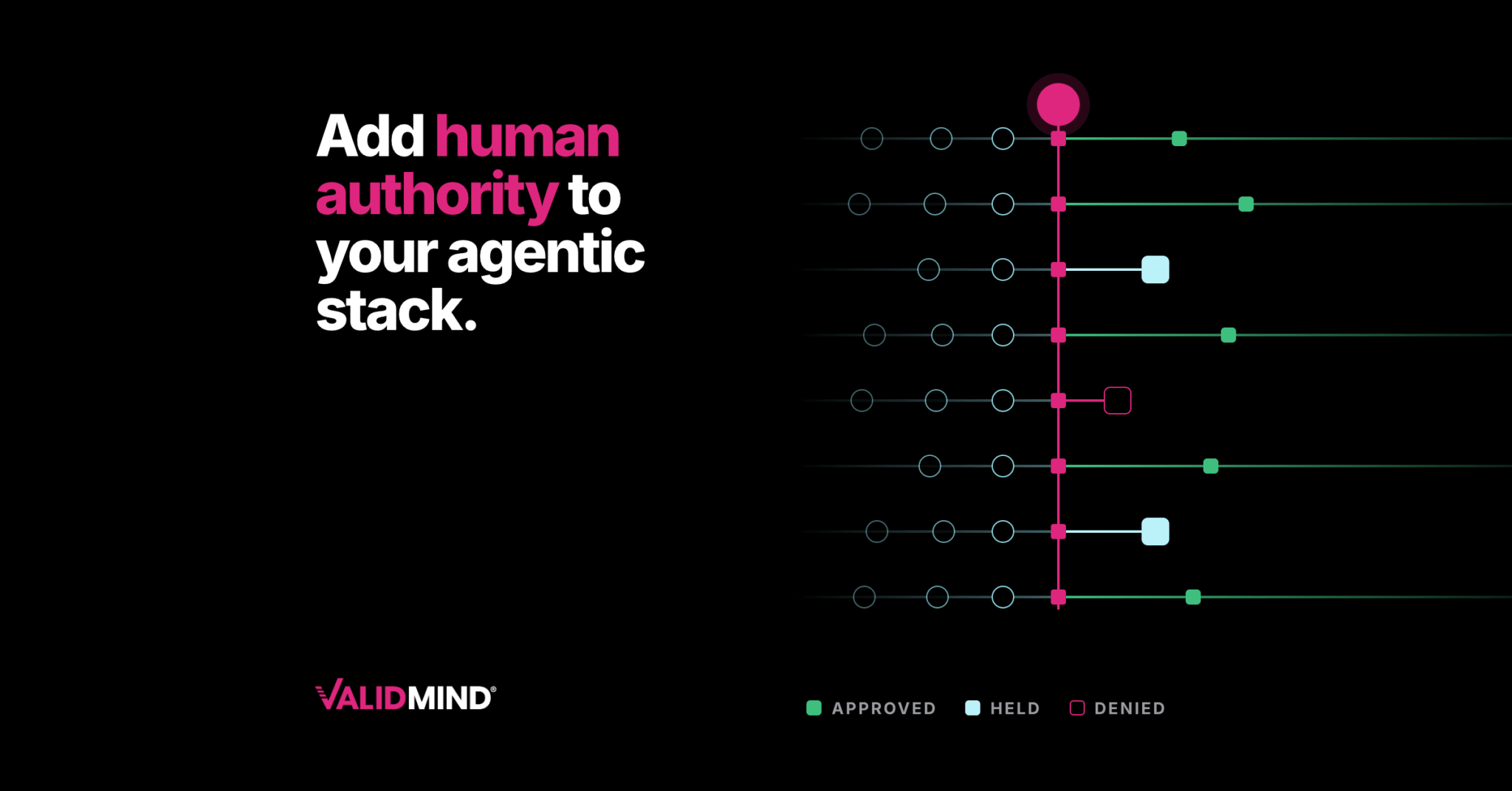
03Safe patches roll out on their own, and risky ones go to a person.
In the demo, the charter checks Ansible inventory tags before any server reboots. Systems tagged as highly available get a canary rollout. Systems without the tag wait for a person to decide.
04A denied agent rewrites its plan instead of stopping.
When the agent asked to reboot everything, the request was denied. It did not give up or look for a way around the rule. It did the part it was allowed to do and handed the rest to a person.
The agent is not given new freedom. It is held to the standard your people already meet.
05Every agent inherits the charter, including the ones you add later.
Pasting rules into every prompt drifts over time. A charter set once is enforced on every agent that connects, so a new fleet starts under the same rules as the old one.
06Three simple rules belong in every charter.
- Don’t break production.
- Don’t collude with other agents.
- Keep it simple.
The third rule matters more than it looks. A 40-line script gets rejected, so the agent breaks the work into clear steps a person can follow.
Every decision is recorded, so the security team can tune the rules.
Every tool call is signed and logged. You can see what each agent tried, what was allowed, what was held and why. That record is how the rules improve, and the clearer the rules, the more you can automate.
Agent Authority gives every AI agent a manager, a charter and a transcript.
Manager
A named person who is accountable for the agent.Signs the charter, approves the patches that are held and tunes the rules as the agent works.
Charter
What the agent is for and what it must never do, in plain language.Your change rules, checked before every action. The agent can’t edit it or skip it.
Transcript
A record of every action the agent asked to take.The request, the agent’s reasoning, the ruling and who approved it, in a record you own.
Govern AI before it acts.
See how Agent Authority rules on each agent action before it runs: validmind.com/platform/agent-authority