How to Build an Effective AI Enterprise Governance Framework
AI enterprise governance is becoming a top priority as your organization scales AI across operations, customer experience, and decision-making systems. From automated workflows to predictive insights, AI is now deeply embedded in how businesses function day to day.
However, governance maturity often lags behind innovation. While adoption accelerates, many teams struggle to build a structured AI governance framework that keeps pace with evolving systems. Without strong AI enterprise governance, your organization may face increased model risk, compliance gaps, and operational inefficiencies.
This is where AI enterprise governance provides a clear path forward. It helps your team manage risk, strengthen AI compliance and oversight, and ensure AI systems align with business goals.
In fact, according to a 2024 McKinsey report, only 27% of organizations have fully implemented responsible AI governance practices, highlighting a significant gap between adoption and control.
This growing gap between AI adoption and governance maturity reflects the broader need for stronger foundations, as seen in discussions around robust AI governance, where organizations are pushed to move faster toward structured oversight.
This guide is designed to help you build AI enterprise governance in a practical, implementation-focused way, so your organization can scale AI with confidence and control.
What Is AI Enterprise Governance?
AI enterprise governance refers to the frameworks, processes, and controls your organization uses to oversee AI systems at scale. It ensures your models operate safely, ethically, and in line with regulatory expectations while supporting business goals.
In practice, AI enterprise governance brings structure to how your teams build, deploy, and manage AI, making sure there is consistent AI compliance and oversight across every stage of usage.
Key Objectives of AI Enterprise Governance
An effective AI enterprise governance strategy focuses on:
- Managing risk across AI systems and use cases
- Ensuring regulatory compliance and audit readiness
- Maintaining operational oversight across teams
- Driving accountability and transparency in decision-making
- Enabling scalable and controlled AI deployment
These objectives help your organization move from ad hoc AI usage to structured, enterprise-wide control.
Why Enterprises Need Governance Frameworks
As AI adoption grows, so do the challenges tied to managing it. Your organization may already be facing:
- Increasing regulatory scrutiny across industries
- Growing complexity in AI governance models
- The need for consistent oversight across multiple teams
- Pressure to maintain audit-ready processes at all times
Without a defined AI governance framework, it becomes difficult to scale AI responsibly while maintaining control.
Core Components of an AI Enterprise Governance Framework
Building strong AI enterprise governance requires multiple components working together. Each plays a role in ensuring your governance model is practical, scalable, and aligned with business risk.
1. Governance Structure and Ownership
Clear ownership is the foundation of effective AI enterprise governance.
Your organization should:
- Define roles and responsibilities across teams
- Establish governance committees for oversight
- Assign accountability across data science, risk, compliance, and business units
In many cases, organizations also rely on AI governance consulting to design governance structures that align with both regulatory expectations and internal workflows.
2. AI Risk Management and Model Oversight
Risk management is a core pillar of AI enterprise governance.
Your team needs to:
- Identify and classify risks across models
- Define acceptable risk tolerance levels
- Implement structured processes for model risk management governance
- Maintain continuous oversight across all deployed systems
Strengthening this area often involves aligning governance with AI model risk management, ensuring your organization can monitor, validate, and manage model risks effectively as part of broader enterprise AI risk management.
3. Policy and Compliance Framework
Policies bring consistency to AI enterprise governance.
Your organization should:
- Define clear governance policies for AI usage
- Align processes with regulatory standards
- Ensure consistent enforcement across all teams
Strong AI compliance and oversight ensures that governance is not just defined but actively followed, reducing the risk of non-compliance.
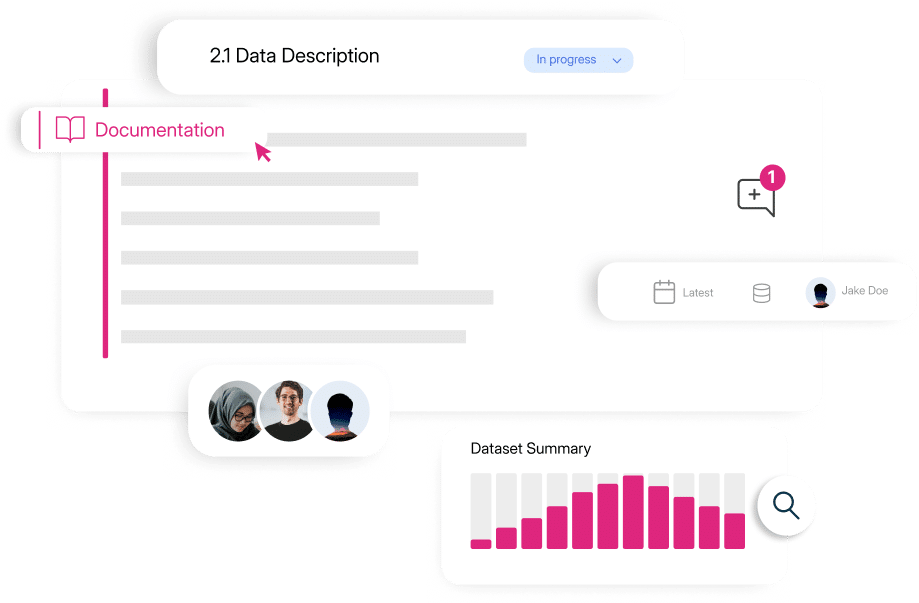
Structured documentation workflows give your teams a consistent, trackable record of every model’s data description, development status, and compliance progress, all maintained collaboratively in one place.
4. AI Lifecycle Governance
Effective AI enterprise governance must extend across the full lifecycle of AI systems.
This includes governance during:
- Development
- Validation
- Deployment
- Ongoing monitoring
By implementing AI lifecycle governance, your organization ensures that controls remain active at every stage, not just during initial model approval.
5. Monitoring and Continuous Improvement
Continuous monitoring is what keeps AI enterprise governance effective over time.
Your teams should focus on:
- Tracking model performance in real-world conditions
- Detecting drift and unexpected behavior
- Implementing AI governance monitoring systems
This ongoing feedback loop allows your organization to refine governance processes, strengthen enterprise AI risk controls, and maintain long-term reliability across AI systems.
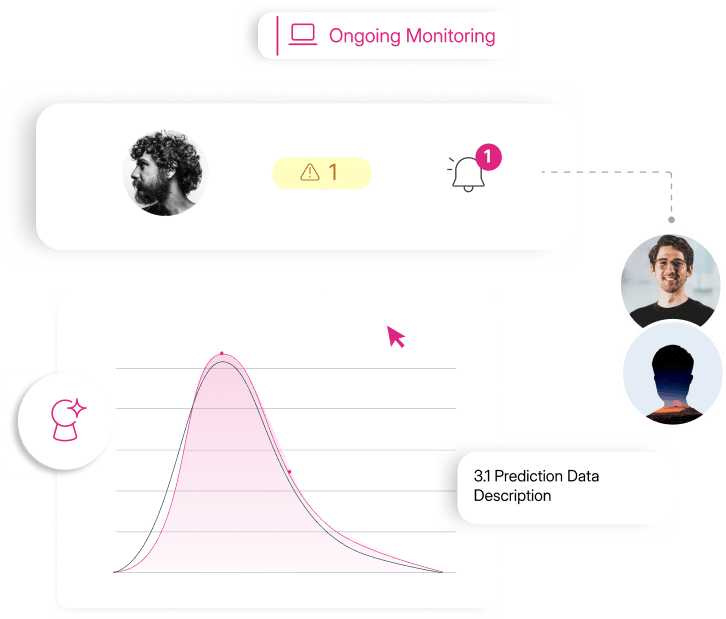
ValidMind’s ongoing monitoring surfaces drift signals and routes alerts to your responsible team members in real time, so performance issues are caught and escalated before they become compliance failures.
Challenges in Building AI Enterprise Governance
As your organization scales AI, implementing AI enterprise governance is not just about defining policies. It comes with real operational challenges that can slow progress if not addressed early.
Fragmented Governance Across Teams
In many organizations, AI initiatives grow independently across departments. Data science, risk, and business teams often operate in silos, each following different processes.
This lack of coordination makes AI enterprise governance inconsistent. Your teams may define governance differently, leading to gaps in AI compliance and oversight and uneven application of AI governance models across use cases.
Lack of Standardized Processes
Another common issue is the absence of standardized workflows.
Your organization might experience:
- Inconsistent validation practices across models
- Heavy reliance on manual documentation
- Unclear approval processes
Without standardization, AI enterprise governance becomes difficult to scale. It also weakens model risk management governance, making it harder to ensure reliability and audit readiness.
Limited Visibility into AI Systems
Visibility is one of the biggest barriers to effective AI enterprise governance.
Many teams do not have:
- A centralized inventory of all AI models
- Clear tracking of models across the lifecycle
This lack of visibility makes it difficult for your organization to enforce enterprise AI risk controls and maintain strong AI lifecycle governance, especially as the number of models grows.
Balancing Governance and Innovation
Your teams may also see governance as a blocker rather than an enabler.
Common concerns include:
- Governance slowing down model deployment
- Difficulty scaling governance processes alongside AI growth
The challenge is building AI enterprise governance that supports innovation while maintaining control. When done right, governance should enable faster, safer scaling rather than restrict progress.
How to Build an AI Enterprise Governance Framework (Step-by-Step)
Creating effective AI enterprise governance requires more than defining policies. Your organization needs a structured approach that connects governance with real workflows, risk management, and business priorities.
The steps below help you build AI enterprise governance in a way that is practical, scalable, and aligned with how your teams operate.
Step 1: Identify and Inventory AI Models
The first step in building AI enterprise governance is gaining full visibility into your AI landscape. In many organizations, models are developed across teams without a centralized record.
Your team should create a unified inventory that tracks all AI models, including their purpose, ownership, and deployment status. Mapping these models to business functions helps you understand where risks exist and where governance needs to be stronger.
Without this foundation, AI enterprise governance cannot be enforced consistently.
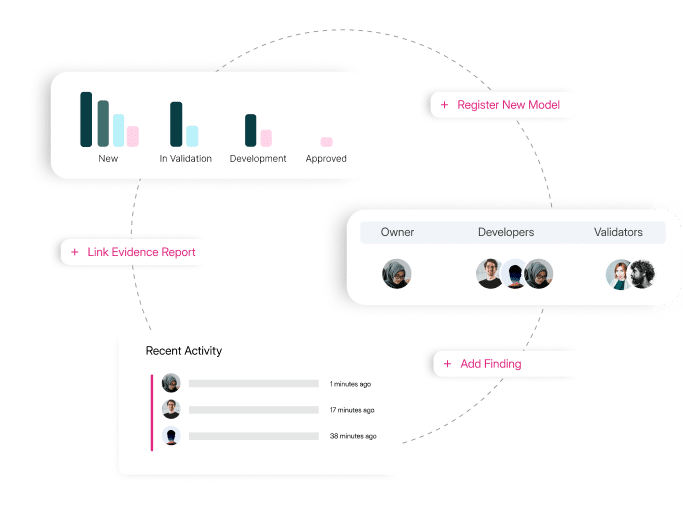
A centralized model inventory lets your organization register every model, assign ownership across developers and validators, link evidence, log findings, and track recent activity without relying on scattered spreadsheets or manual records.
Step 2: Define Governance Policies and Standards
Once visibility is established, your organization needs clear and enforceable policies. These policies form the backbone of your AI governance framework.
You should define:
- Documentation requirements for every model
- Standardized validation processes
- Approval workflows before deployment
When policies are clearly defined, your teams can follow consistent practices, improving AI compliance and oversight and reducing ambiguity across departments.
Step 3: Establish Risk-Based Governance Controls
Not every model requires the same level of oversight. Strong AI enterprise governance depends on applying controls based on risk.
Your organization should classify models based on factors like business impact, regulatory exposure, and customer interaction. High-risk models should go through stricter validation and monitoring, while low-risk models can follow lighter processes.
This risk-based approach strengthens enterprise AI risk management without slowing down innovation.
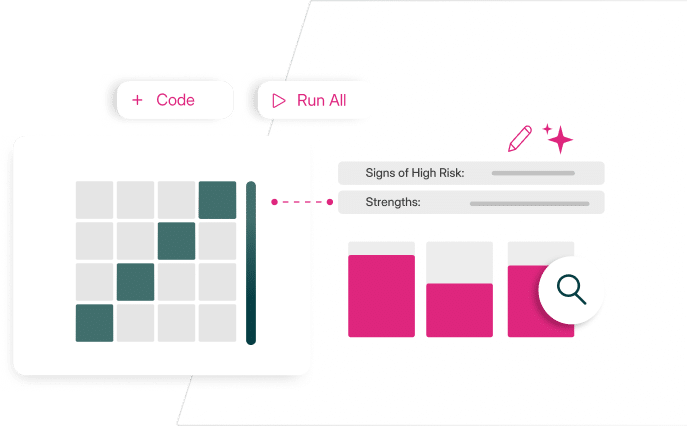
ValidMind automatically surfaces signs of high risk and model strengths during testing, giving your governance teams the evidence they need to apply proportionate controls based on actual risk signals rather than assumptions.
Step 4: Implement Monitoring and Oversight Mechanisms
Governance does not end at deployment. Continuous monitoring is essential to keep AI enterprise governance effective over time.
Your teams should implement systems that track model performance, detect drift, and trigger alerts when thresholds are breached. Adding governance checkpoints ensures that models are regularly reviewed and remain compliant.
This is where AI governance monitoring becomes critical, enabling continuous oversight instead of periodic checks.
Step 5: Align Governance with Business Strategy
For AI enterprise governance to succeed, it must align with your organization’s broader business goals. Governance should not operate in isolation.
You need to connect governance efforts with business priorities, ensuring that AI systems deliver value while staying compliant. Involving stakeholders from risk, compliance, and business teams helps create alignment and shared accountability.
This ensures governance supports growth rather than becoming a barrier.
Step 6: Measure and Improve Governance Maturity
AI enterprise governance is not a one-time implementation. It evolves as your organization scales AI adoption.
Your team should regularly assess governance maturity, identify gaps, and refine processes. This includes reviewing policies, monitoring effectiveness, and improving workflows over time.
By continuously improving your AI enterprise governance, you can scale AI confidently while maintaining strong enterprise AI risk controls.
As your organization scales, governance must evolve without slowing innovation, which is why approaches focused on scaling AI governance without slowing down AI are becoming increasingly important for maintaining both speed and control.
How AI Governance Platforms Enable Enterprise Governance
As your organization grows its AI footprint, managing AI enterprise governance manually becomes inefficient and error-prone. This is where AI governance platforms and AI governance software help you scale governance without adding complexity.
Centralized Governance Infrastructure
A centralized AI governance platform gives your organization a single source of truth for all AI models. Instead of scattered tracking, your teams can manage everything in one place.
This allows you to:
- Maintain a complete inventory of AI systems
- Standardize governance workflows across teams
- Enforce consistent AI enterprise governance practices
With centralized infrastructure, your organization gains better visibility, stronger AI lifecycle governance, and improved control over model usage.
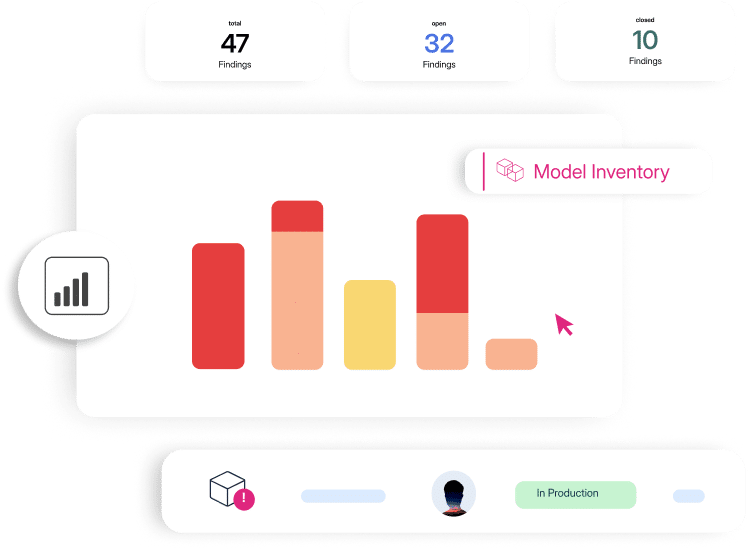
ValidMind’s model inventory gives your risk teams a complete picture of every model across its lifecycle, with findings tracked by total, open, and closed status and production models flagged for immediate review.
Automated Governance Workflows
Manual governance processes often slow teams down and introduce inconsistencies.
Using AI governance software, your organization can:
- Reduce manual effort through automated workflows
- Standardize validation and approval processes
- Improve consistency across governance activities
Automation ensures that AI enterprise governance is applied uniformly, helping your teams focus more on decision-making rather than operational overhead.
Integration Across Enterprise Systems
For AI enterprise governance to work effectively, your systems need to be connected. Strong end-to-end AI governance integrations help your organization connect data, risk, and compliance systems, improving visibility and enabling more consistent governance across teams.
By integrating data, risk, and compliance systems, your organization can:
- Enable seamless information flow across teams
- Improve collaboration between stakeholders
- Strengthen AI compliance and oversight
This connected approach supports scalable enterprise AI risk management and ensures governance is embedded across your entire ecosystem.
How ValidMind Supports AI Enterprise Governance
As your organization works to operationalize AI enterprise governance, having the right platform can make a significant difference. ValidMind supports this by providing a structured and scalable approach to governance.
End-to-End AI Governance Platform
ValidMind enables your organization to implement and manage AI enterprise governance through a centralized platform.
With this approach, you can:
- Implement structured AI governance frameworks aligned with business needs
- Manage AI systems centrally with full visibility
- Enforce governance policies consistently across teams
This helps ensure that your AI enterprise governance is not just defined, but actively executed.
Integrated Model Risk Management
Effective AI enterprise governance requires strong alignment with risk management.
ValidMind supports this through integrated AI model risk management, allowing your organization to:
- Oversee model validation processes
- Manage risk across the entire AI lifecycle
- Maintain compliance and audit readiness
This integration strengthens model risk management governance and improves overall enterprise AI risk controls.
Scalable Governance for Enterprise AI
As your AI adoption grows, your governance approach needs to scale with it.
ValidMind helps your organization:
- Support expanding AI portfolios without losing control
- Enable continuous AI governance monitoring across systems
- Reduce operational friction through structured workflows
This ensures your AI enterprise governance remains effective even as complexity increases.
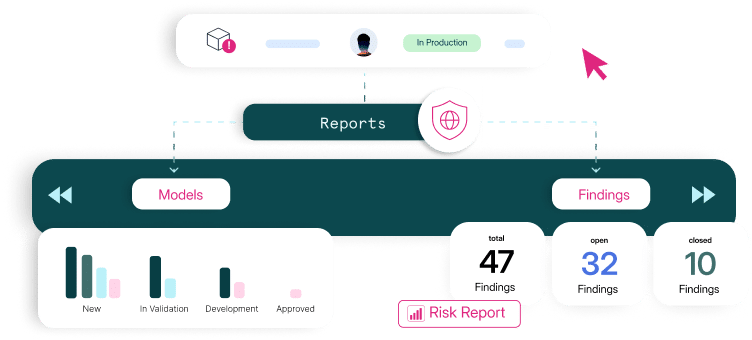
ValidMind’s reporting dashboard gives your leadership and compliance teams a unified view across models and findings, with risk reports generated automatically so governance visibility scales with your AI portfolio.
Key Practices for Effective AI Enterprise Governance
To make AI enterprise governance successful in your organization, it’s important to follow practical, scalable best practices.
Align Governance with Risk and Business Impact
Your governance efforts should reflect the level of risk associated with each AI system.
By aligning AI enterprise governance with business impact and regulatory exposure, your organization can prioritize resources effectively and strengthen enterprise AI risk management.
Implement Continuous Monitoring
Governance should not be limited to periodic reviews.
Implementing continuous AI governance monitoring allows your teams to track model performance, detect issues early, and maintain ongoing AI compliance and oversight. This ensures your governance remains active and reliable.
Use Technology to Scale Governance
As AI adoption grows, manual processes become unsustainable.
Using AI governance platforms and AI governance software helps your organization scale AI enterprise governance, improve visibility, and automate critical workflows.
Ensure Cross-Functional Collaboration
Effective AI enterprise governance requires collaboration across multiple teams.
Your data science, risk, compliance, and business teams need to work together to ensure governance is consistently applied. This improves accountability and strengthens responsible AI governance.
Maintain Audit-Ready Documentation
Documentation is a critical part of AI enterprise governance.
Your organization should maintain clear, up-to-date records of model development, validation, and monitoring processes. This ensures audit readiness and supports strong AI compliance and oversight across all AI systems.
Trends Shaping the Future of AI Enterprise Governance
AI enterprise governance is evolving quickly as your organization scales AI across critical business functions. What worked as a basic governance setup a few years ago is no longer enough to manage today’s complexity and risk.
One of the biggest shifts is the rise in regulatory requirements. Governments and industry bodies are introducing stricter expectations around AI compliance and oversight, making structured AI enterprise governance a necessity rather than an option.
At the same time, there is a growing move toward automated systems. Your organization will increasingly rely on AI governance software and AI governance platforms to handle governance workflows, reduce manual effort, and ensure consistency across teams.
Real-time monitoring is also becoming a core requirement. Instead of periodic checks, AI governance monitoring enables continuous visibility into model performance, helping your teams respond faster to risks and maintain strong enterprise AI risk controls.
Finally, the importance of responsible AI governance continues to grow. As AI systems directly impact customers and business decisions, your organization needs governance that ensures fairness, transparency, and accountability at every stage of the AI lifecycle
Conclusion
AI enterprise governance is essential if your organization wants to scale AI responsibly and sustainably. As AI adoption grows, moving from fragmented efforts to a structured AI governance framework becomes critical for maintaining control and consistency.
By implementing strong AI enterprise governance, your organization can improve visibility, strengthen enterprise AI risk management, and ensure continuous AI compliance and oversight. Combining governance with monitoring, risk management, and centralized platforms creates a foundation for long-term success.
Organizations that invest early in AI enterprise governance are better positioned to scale AI confidently while building trust with stakeholders and regulators.
If your organization is looking to strengthen AI enterprise governance, ValidMind can help you implement structured governance workflows, improve model risk management governance, and support end-to-end oversight.
Booking a demo can give your team a clearer view of how to operationalize governance while maintaining flexibility and control.
AI Enterprise Governance FAQs
1. What is AI enterprise governance?
AI enterprise governance refers to the frameworks, policies, and processes used to oversee AI systems across an organization. It ensures AI models operate safely, comply with regulations, and align with business objectives while maintaining transparency and accountability.
2. Why is AI enterprise governance important?
AI enterprise governance is important because it helps organizations manage model risk, ensure regulatory compliance, and maintain control over AI systems. Without proper governance, AI can introduce operational risks, compliance issues, and reputational damage.
3. What are the key components of an AI enterprise governance framework?
Key components include governance structure, risk management processes, policy and compliance frameworks, lifecycle governance, and continuous monitoring. Together, these elements ensure consistent oversight of AI systems across the organization.
4. How does AI enterprise governance improve model risk management?
AI enterprise governance improves model risk management by establishing structured validation processes, continuous monitoring, and clear accountability. This ensures models perform reliably and remain compliant with risk and regulatory requirements.
5. What challenges do organizations face in AI governance?
Organizations often face challenges such as fragmented governance processes, lack of standardized policies, limited visibility into AI systems, and difficulty balancing governance with innovation.
6. How do you build an AI enterprise governance framework?
To build an AI enterprise governance framework, organizations should create a model inventory, define governance policies, establish risk-based controls, implement monitoring systems, and continuously improve governance maturity.
7. What role do AI governance platforms play in enterprises?
AI governance platforms help organizations centralize governance processes, automate workflows, monitor AI systems, and maintain compliance. They improve visibility and scalability across enterprise AI operations.
8. How does AI governance ensure regulatory compliance?
AI governance ensures compliance by enforcing policies, maintaining documentation, monitoring model behavior, and aligning AI systems with regulatory standards and industry guidelines.
9. What industries need AI enterprise governance the most?
Highly regulated industries such as banking, financial services, insurance, and healthcare need strong AI enterprise governance to meet strict compliance and risk management requirements.
10. How can organizations scale AI governance effectively?
Organizations can scale AI governance by adopting centralized governance frameworks, implementing continuous monitoring, standardizing processes, and using governance platforms to automate oversight and improve efficiency.