Trustworthy Insurance AI in an Autonomous World
Insurance AI now plays an active role in underwriting decisions, claims handling, pricing adjustments, and fraud detection, often with minimal human intervention. As these systems operate at scale, their decisions increasingly carry regulatory, legal, and ethical consequences.
This shift marks a clear inflection point. When automated systems influence who receives coverage, how claims are evaluated, or how risk is priced, trust cannot rely on intent alone. It must be demonstrable. Trust becomes a system-level property rooted in governance, oversight, accountability, and reflected in how models are monitored and controlled in practice. As insurance AI moves from decision support to decision execution, the central question is whether they can be trusted to operate responsibly under sustained scrutiny.
Trust Breaks When Governance Stays Aspirational
Many insurers can point to AI principles, ethical guidelines, and governance policies that articulate how AI should be used. These documents often reflect thoughtful intent. In practice, trust comes from what is enforced.
The distinction is between aspirational governance and operational governance. Aspirational governance lives in policy statements and slide decks. Operational governance lives in day-to-day workflows, focusing on how models are registered, what questions must be answered before deployment, who reviews the evidence, and how issues are escalated and resolved. You can have every standard written down and still have no real control. In autonomous systems, governance that exists only in a PDF does not change outcomes.
Trust in insurance AI is earned when governance is disciplined, consistently applied, and embedded directly into how systems are built, reviewed, and operated, where it can actually shape behavior.
Take a deeper dive into AI governance for the insurance industry: AI Governance for Insurance
Evidence Is the Currency of Trust
In highly regulated industries, trust is no longer earned through intent alone. Regulators, boards, and increasingly consumers expect proof. They want to see that the right questions were asked, the right tests were performed, and the right reviews took place at the moment decisions were made.
This is where evidence becomes the currency of trust. Documented analyses, completed review forms, validation findings, signoffs, and audit trails transform governance into something concrete and defensible. In complex systems, trust is an artifact. As automation increases, this expectation only intensifies. The use of AI does not reduce the obligation to demonstrate due diligence and care, you cannot hide behind the model.
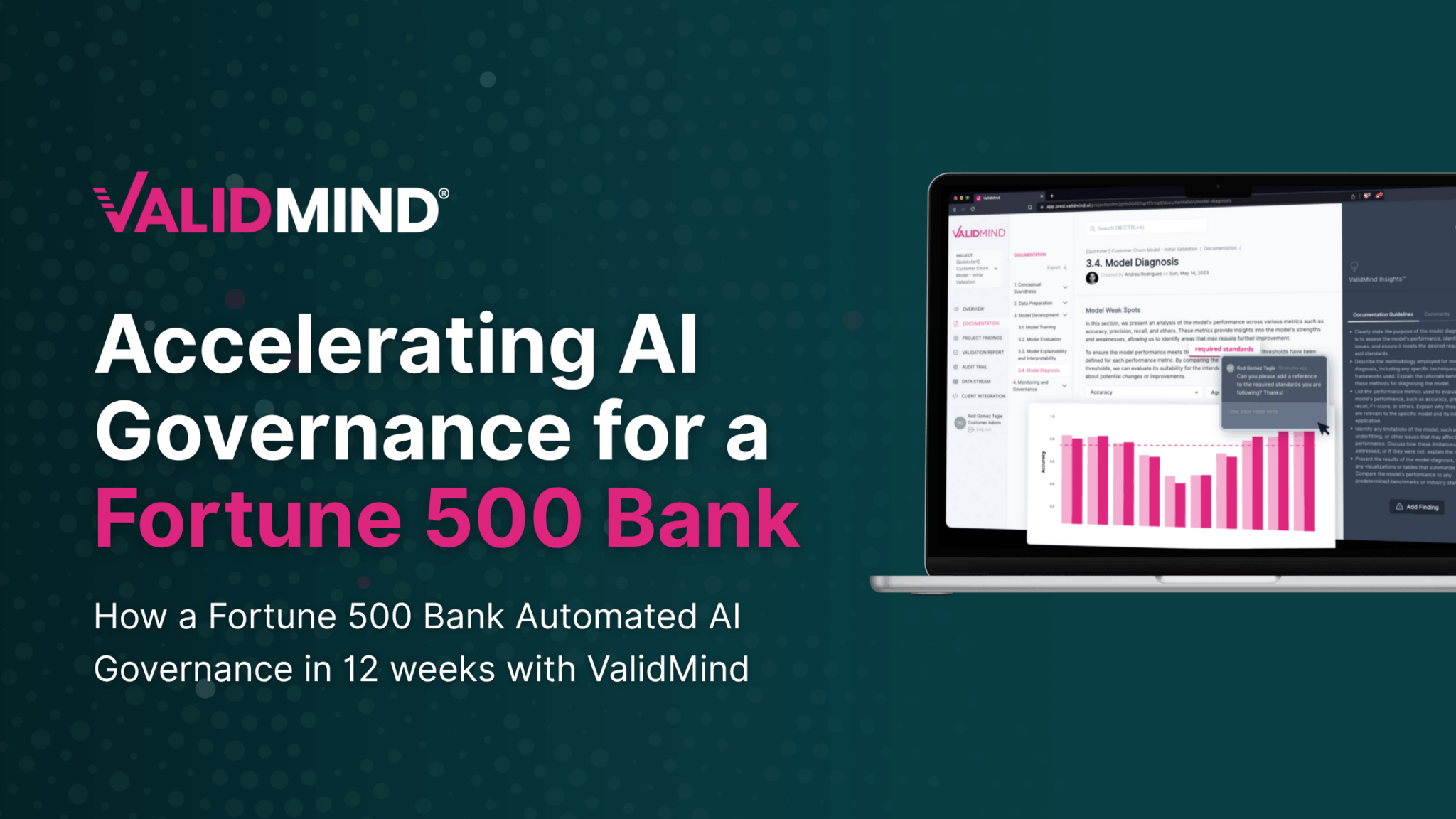
Case Study: A leading insurer builds confidence in AI governance
Autonomous AI Fails in Unintuitive Ways
Evidence matters because AI does not fail predictably. AI systems do not fail in the same way as traditional software or statistical models. They can perform well across millions of decisions, yet break down in edge cases that are difficult to predict or test for. This creates a false sense of security: a model may appear reliable right up until it is not. Traditional governance approaches were not designed for this reality. Periodic validation cycles assume relatively static behavior.
Autonomous and learning systems do not operate that way. They evolve, interact with changing data, and can drift in subtle but meaningful ways between review points. As a result, trustworthy insurance AI requires a different posture: continuous monitoring, real time guardrails, and the ability to respond quickly when signals indicate emerging risk. Oversight must be ongoing and built into operations.

Automation Does Not Eliminate Accountability
The increasing use of automation does not change the obligations insurers carry. Legal, ethical, and consumer protection requirements apply regardless of whether a decision is made by a human or AI model. The choice of technology does not alter responsibility for outcomes. Yet autonomy can make accountability harder to see. When decisions are distributed across data pipelines, models, vendors, and workflows, responsibility can become diffuse.
That ambiguity is precisely what regulators and stakeholders are pushing back against. In an autonomous environment, accountability must be explicit. Someone must be responsible for how models are designed, monitored, and corrected when things go wrong. Autonomy does not absolve responsibility, it raises the bar for clarity.
What Trustworthy Insurance AI Requires
Trustworthy insurance AI does not emerge from a single control or framework. It results from the practices discussed throughout the article working in unison: governance embedded into workflows, evidence generated as decisions are made, continuous oversight aligned with risk, and accountability for outcomes. Taken together, these practices define what trust actually requires in autonomous insurance AI. They make innovation sustainable by surrounding powerful systems with the discipline needed to operate responsibly at scale.
Trust does not emerge naturally from autonomy. It must be intentionally designed into how AI systems are governed, monitored, and held accountable, much like other regulated industries have learned through experience. Insurance now faces a similar moment. In an autonomous world, trust is not implied, it is engineered. The next articles in this series will explore how governance becomes operational in practice, and how questions of risk, accuracy, and fairness collide in real world insurance AI decisions.
Speak with a ValidMind expert to learn how to engineer trust into autonomous insurance AI at scale.