Feature Highlight: Seamless Integrations for End-to-End AI Governance
AI adoption is accelerating across financial services, but governance programs often struggle to keep pace. One of the biggest friction points? The manual work required to keep model registries, ticketing systems, and governance platforms in sync. When model metadata lives in silos, teams waste time on data entry, risk version discrepancies, and lose the traceability that regulators expect.
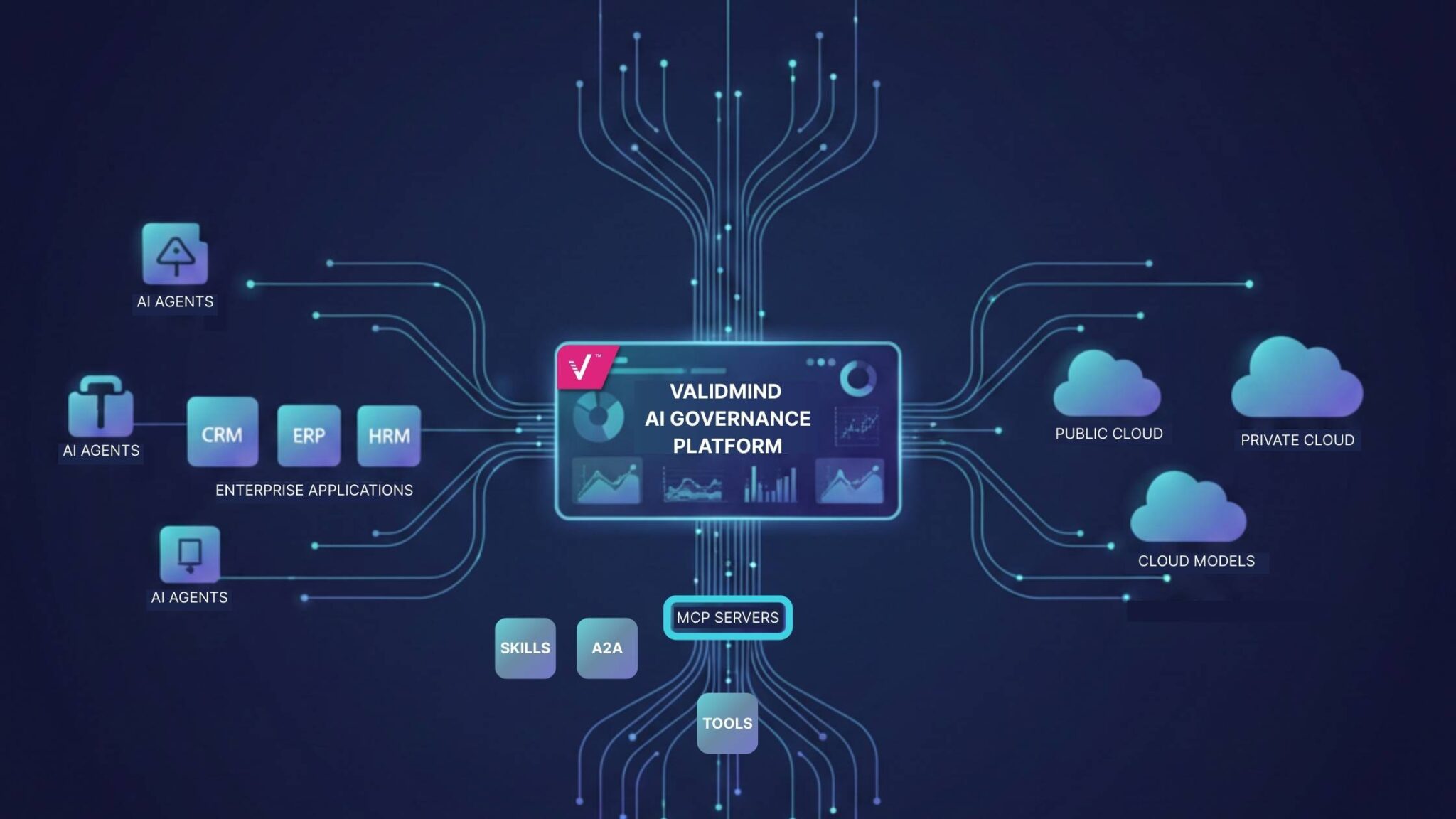
ValidMind’s integration capabilities eliminate these gaps by connecting your AI governance workflows directly to the systems where models are built, deployed, and monitored.
Connect Your AI Ecosystem
Modern AI programs span multiple platforms: data scientists build in MLflow or SageMaker, deploy foundation models via AWS Bedrock, track issues in Jira or ServiceNow, and report through PowerBI or Snowflake. Without integration, governance becomes a bottleneck—a manual reconciliation exercise that slows innovation and introduces risk.
ValidMind integrates natively with these systems:
- ML Registries: AWS SageMaker, AWS Bedrock, MLflow/Databricks, GitLab
- Workflow & Ticketing: Jira, ServiceNow
- Analytics & Reporting: Microsoft Power BI, Snowflake, Object Storage (Amazon S3, Google Cloud Storage)
- Custom Integrations: Connect to internal model registries, proprietary platforms, or any service that exposed data through a compatible API
These aren’t one-way data dumps. ValidMind’s integrations support bidirectional workflows: pull model metadata automatically, push governance events to external systems, and trigger actions based on conditions in either direction.
Why Integration Matters for Governance
Regulations like SR 11-7, SS1/23, and the EU AI Act require organizations to maintain complete, accurate records of their AI systems throughout the model lifecycle. When model information is fragmented across platforms, demonstrating compliance becomes a documentation exercise rather than an operational reality.
With ValidMind’s integrations, governance data stays synchronized with development and deployment systems automatically. This means:
- Single source of truth: Model versions, deployment stages, and metadata flow directly from your ML platform into ValidMind’s inventory.
- Reduced manual entry: No more copying data between systems or reconciling spreadsheets.
- Audit-ready traceability: Every sync operation is logged, creating a defensible record of what was captured and when.
- Workflow automation: Governance events can trigger actions in external systems—and external events can drive ValidMind workflows.
In Practice: Governing Foundation Models with AWS Bedrock
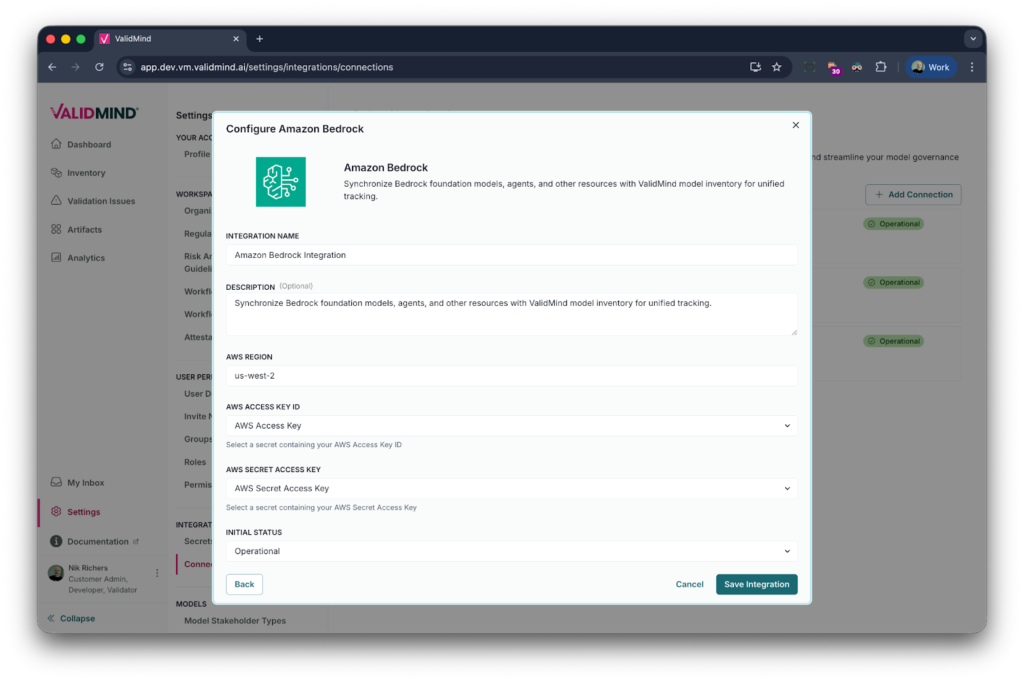
Consider a financial institution deploying generative AI through AWS Bedrock. They’re using multiple resource types—foundation models for document summarization, agents for customer service automation, and flows that orchestrate complex tasks. Each resource carries different risk profiles and governance requirements.
With ValidMind’s Bedrock integration, the governance team gains visibility across this entire ecosystem. ValidMind connects to Bedrock and automatically discovers all foundation models, agents, flows, and AgentCore runtimes. Each resource is linked to a corresponding ValidMind inventory record, and as models are updated or new agents are deployed, metadata flows in automatically—including dependency relationships between components.
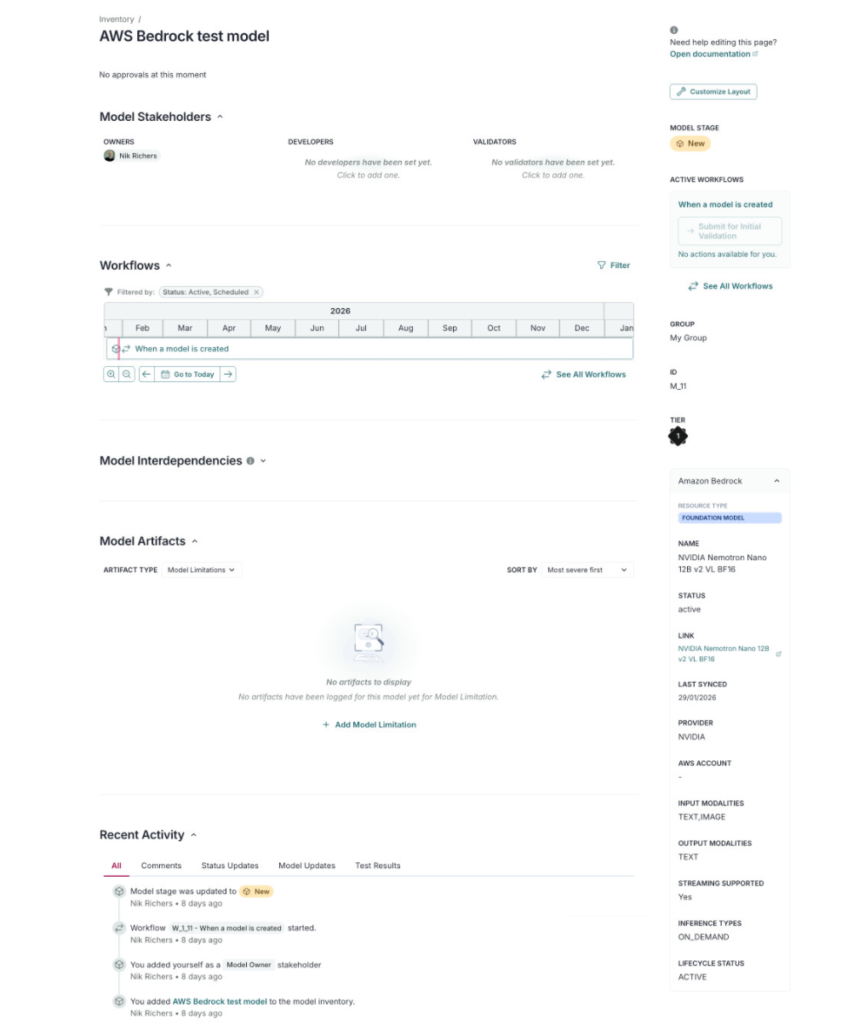
But data synchronization is just the starting point. Integration fields become active participants in your governance processes:
- Calculated fields: Use Bedrock deployment stages and model metadata as inputs to dynamic risk scores that update automatically as underlying data changes.
- Analytics dashboards: Visualize your AI footprint in real time—foundation models by business unit, resource distribution by risk tier, or any downstream corresponding artifacts or findings related to your foundation models.
- Workflow triggers: When a Bedrock agent’s status changes from development to deployment-ready, automatically trigger a validation workflow without manual handoff.
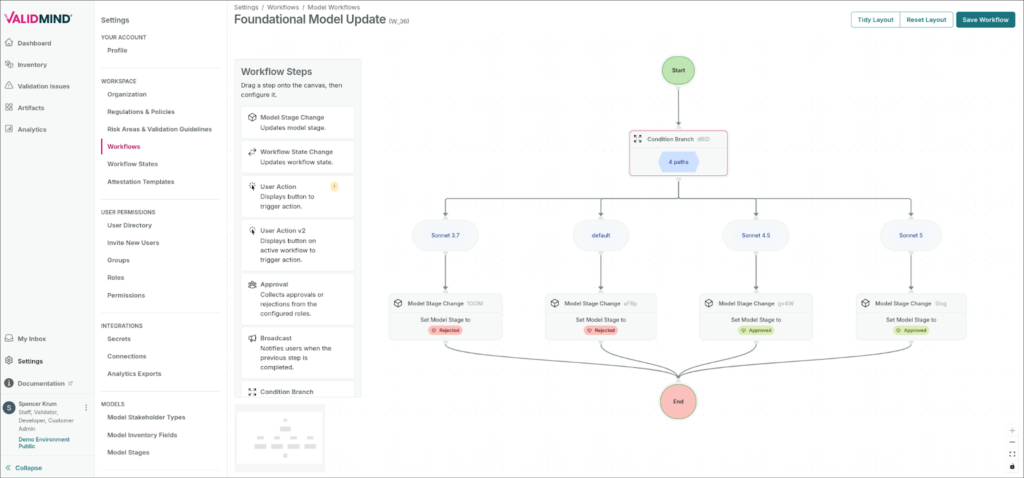
- Conditional routing: Use integration fields to branch workflows as needed, routing high-risk foundation models through enhanced review while low-risk updates are fast-tracked.
This transforms governance from reactive documentation into proactive orchestration. Integration data doesn’t just populate fields; it drives risk assessments, powers dashboards, and triggers governance processes. When regulators ask about AI system oversight, the governance team has immediate answers backed by synchronized, auditable data.
Event-Driven Governance with Webhooks
Integrations aren’t just about data synchronization—they’re about workflow automation. ValidMind’s webhook capabilities enable event-driven governance:
- Outgoing webhooks: When a model fails validation or triggers a monitoring alert, ValidMind can automatically create a ServiceNow incident or Jira ticket with full context
- Incoming webhooks: When an external issue is resolved, a webhook can resume paused ValidMind workflows, continuing the governance process without manual intervention
This bidirectional flow means governance doesn’t exist in isolation. It’s woven into the operational fabric of how models are built, deployed, and maintained.
Get started
New to ValidMind? See how ValidMind powers AI governance and model risk management that accelerates your team:
Already using ValidMind? Let’s get you started with these features:
- Managing Integrations – Configure connections and bindings
- Integrations Examples – Webhook workflows and HTTP request patterns
- Public API & Integrations Whitepaper – Deep dive into methods, use cases, and architecture